The outbreak of Covid-19 has forced many businesses to migrate from the manual way of doing things to digital solutions.
Businesses that used to manage their expenses manually using cash or cheques are now using mobile money which ultimately saves time and creates easy tracking mechanisms.
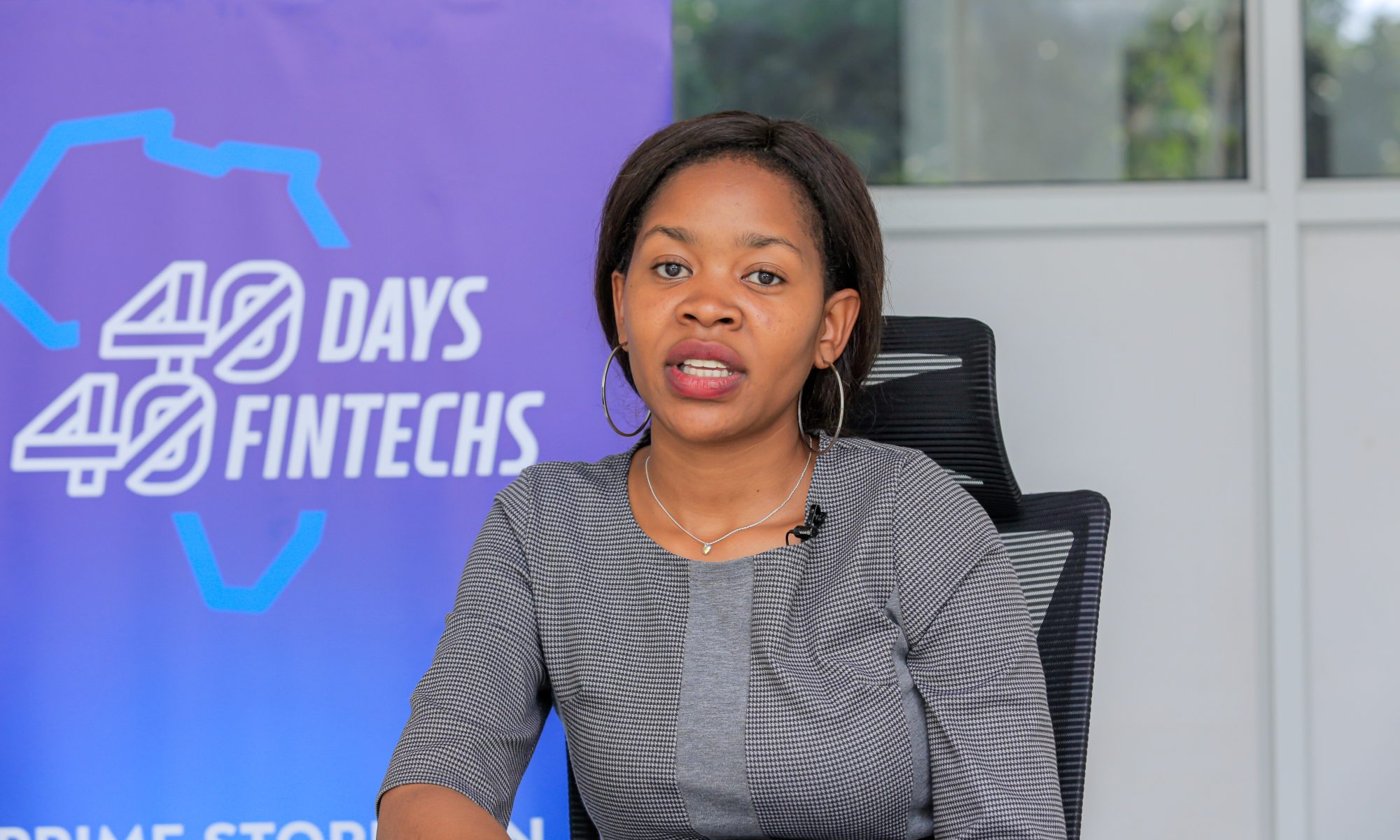
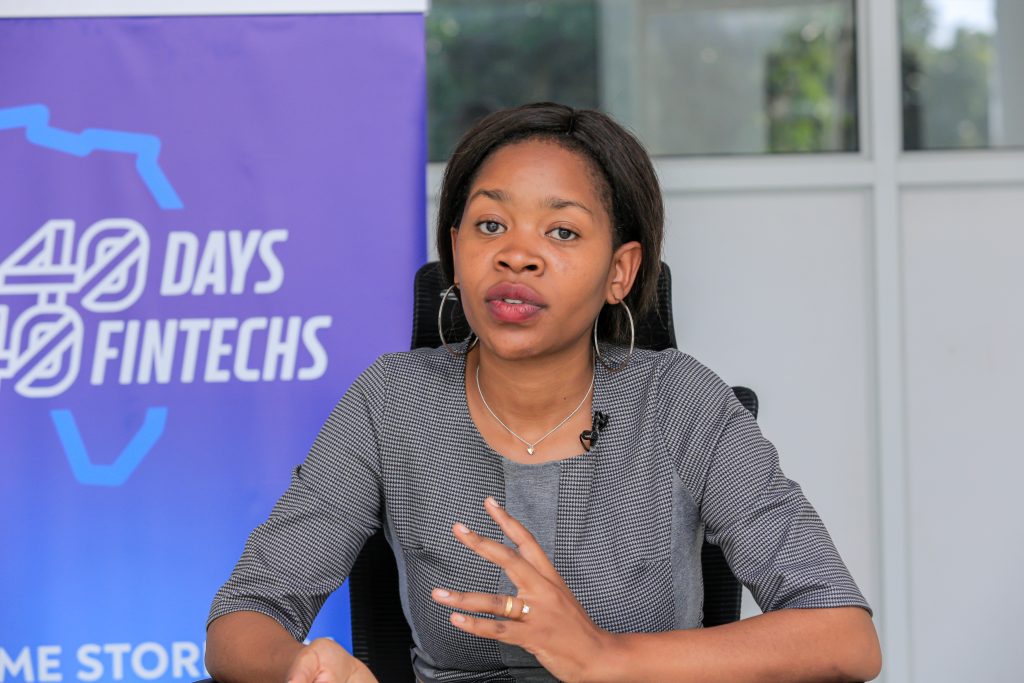
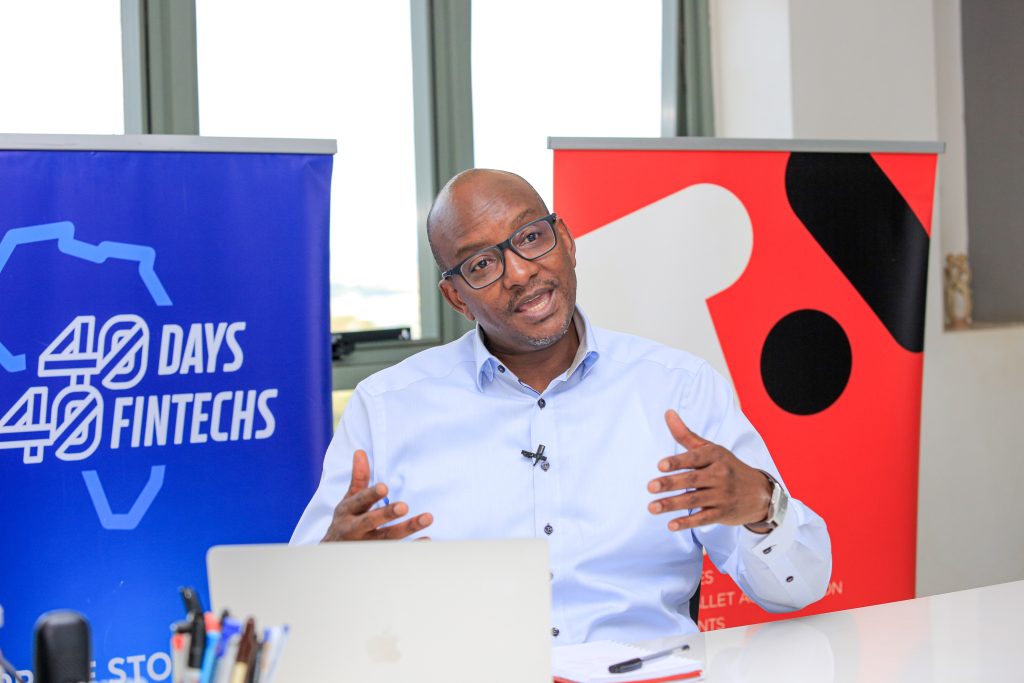
According to Lyn Tukei, the Xente head of marketing and communications, Covid-19 has accelerated the global shift to automated, paperless, and cashless finance processes.
Xente is a Financial Technology company (FinTech) that helps businesses simplify finance by offering automated solutions with a goal to help African businesses get connected to the global economy.
“One of our key features is issuance of visa cards to businesses. They can be either virtual or physical cards. We are actually the first FinTech to issue visa cards in Uganda, through our partnership with Visa,” she says.
Xente also facilitates mobile money disbursements by companies. Tukei says this helps businesses to approve every payment, track every transaction in real-time, manage money across teams, branches, and/or countries, and sync data with their accounting platforms.
“If you have remote teams, instead of going to a mobile money agent, you simply log onto the Xente platform and send money in seconds. It can be mobile money, it can be airtime, it can be any bill,” she says, adding;
“We also help people make bank transfers using Xente. You can pay salaries. You are also able to collect payments from wherever. With this platform, you are able to get statements whenever you do a transaction.”
Tukei, who is enthusiastic about women inclusion in the Tech sector, is happy that the FinTech industry in Uganda is maturing steadily, as seen with more companies opening shop and regulations coming in place.
40 Days 40 FinTechs.
Xente are the 36th participants in this year’s 40 Days 40 FinTechs initiative that offers Fintechs useful tools and an introduction to the industry’s emerging technologies, such as Mojaloop Open Source Software, and guidance from Level One Project foundational material. The skills gained from this initiative cover Level One Project Principles, Instant and Inclusive Payment Systems (IIPS), Inclusive Finance and FinTech in general.
Tukei appreciates the 40 Days 40 FinTechs initiative for profiling different players in the market who are providing unique solutions to various problems in society.
“The initiative has also helped in letting the world know how financial technology can turn around the country and the continent at large,” she says.
HiPipo CEO Innocent Kawooya says this year’s edition is cementing the achievements of the previous editions – where over 60 FinTechs have been transformed – but also building on them to leverage digital financial inclusion in East Africa and beyond.
“Xente is playing a critical role in our migration to a cashless economy. We are also happy to see that big companies like Visa are partnering with local FinTechs to simplify digital payments. This will further make our dream of Including Everyone a reality,” he said.
The #40Days40FinTechs platform is run under HiPipo’s Include Everyone program that also encompasses other initiatives such as FinTech Landscape Exhibition, Women in FinTech Hackathon, Summit & Incubator and the Digital and Financial Inclusion Summit and Digital Impact Awards Africa. The platform aptly provides a setting for the various players and stakeholders involved in digital and financial technology to exhibit their products & Services and also share their ideas on how more of us, especially those unserved and underserved by the present financial systems, can be brought into the fold.
Uganda has a huge but largely underdeveloped fashion industry.
According to a November 2020 article by The East African newspaper, “Uganda’s fashion industry is characterized by struggling ventures, semi-professional small-scale production, and lack of infrastructure, institutions and government support.”
Even so, while thousands of Ugandans continue to find their space in fashion and arts, a few others are coming up with solutions that transform the entire industry for the better.
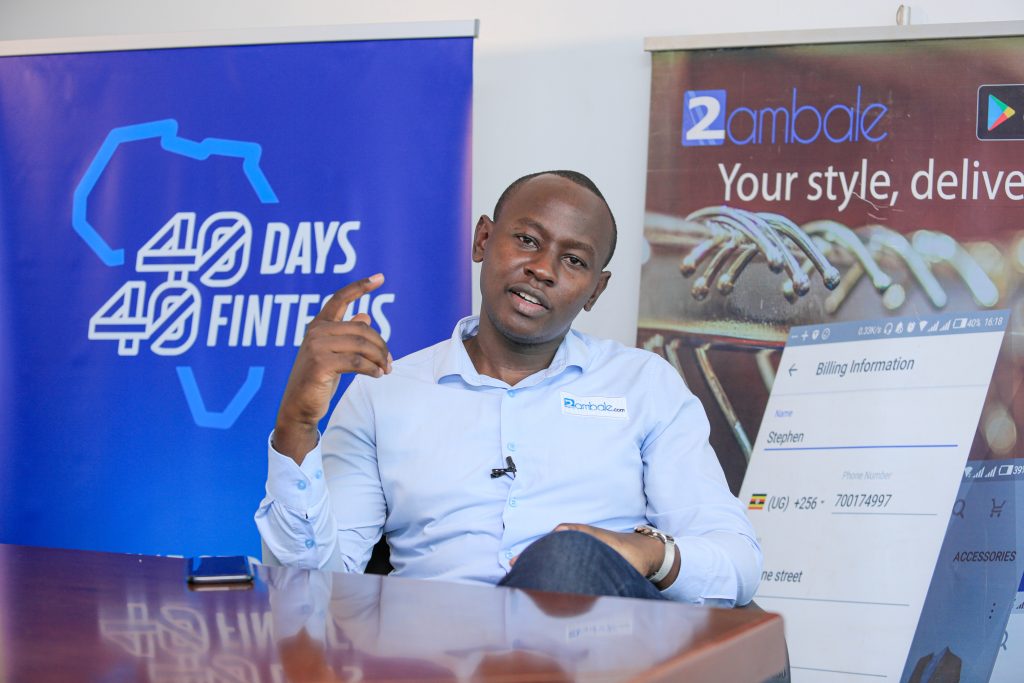
Among such people is Stephen Mutungi, the CEO of 2ambale; a digital marketplace for fashion stores. He sat down with the HiPipo 40 Days 40 FinTechs team and laid bare his 2ambale vision.
QN: What is 2ambale and what do you do?
ANS: 2ambale is an online marketplace for fashion stores. We leverage technologies like machine learning to help small businesses easily pay for efficient advertising on the world’s leading digital platforms like Google, Meta, and Twitter using mobile money.
QN: What is the motivation behind 2ambale? What market challenges do you address?
ANS: 90 percent of businesses in Uganda are small businesses and 33 percent of these are in trade and commerce with physical locations relying on physically visiting customers. To survive, businesses need to pay heavy rent fees for prime locations. This coupled with other rising costs has greatly raised the cost of doing business and seen many small businesses close shop earlier than their first birthdays.
In an effort to reverse this, 2ambale leverages technology to help small businesses dealing in fashion, textile, and art products, to easily pay for efficient marketing online to customers beyond their physical location.
This way, businesses don’t have to compete for prime locations with high costs of doing business but can instead set up anywhere, list their products online, and yet sell to a bigger market.
QN: For the time you have been in business, what do your numbers look like?
ANS: We have enabled businesses to generate over 18,000 business transactions from more than 11,000 buyers. These numbers are very encouraging and we are optimistic about the future.
QN: What is the state of Uganda’s E-commerce Industry?
ANS: E-commerce is a new but one of the fastest growing technology industries in Uganda. The main challenges for this industry are around absence of infrastructure mainly robust and trusted digital payment solutions and logistics services tailored to the industry.
QN: In your opinion, how does the 40 Days 40 FinTechs initiative support the industry?
ANS: Platforms like 40 Days 40 FinTechs create publicity and grow people’s confidence in different financial technologies while pushing and advocating for best practices among the players. This results into the growth of a more disciplined and healthy industry. As 2ambale, we are excited to be part of this season.
About 40 Days 40 FinTechs!
2ambale is participant number 35 in the 2022 40 Days 40 FinTechs initiative. The #40Days40FinTechs platform is run under HiPipo’s Include Everyone program that also encompasses other initiatives such as FinTech Landscape Exhibition, Women in FinTech Hackathon, Summit & Incubator and the Digital and Financial Inclusion Summit and Digital Impact Awards Africa.
It offers participants useful tools and an introduction to the industry’s emerging technologies, such as Mojaloop Open Source Software, and guidance from Level One Project foundational material. The skills gained from this initiative cover Level One Project Principles, Instant and Inclusive Payment Systems (IIPS), Inclusive Finance and FinTech in general.
According to Innocent Kawooya, the HiPipo CEO, though in its infant stage, 2ambale is a great idea, targeting a popular niche.
“Thousands of Youth and Women are involved in fashion and art. However, many of them are yet to integrate technology into their trade. A platform like 2ambale is one way of aiding the digitization of such businesses,” Kawooya said.
He further noted that despite the rapid adoption of digital financial services, an average of 40 percent of Africa’s adult population remains financially excluded and something must be done. “Financial exclusion continues due to the lack of interoperable, open-loop, cost-effective, real-time, and secure retail payments systems/switches to digitally connect large numbers of low-income users onto formal financial rails. The 40 Days 40 FinTechs initiative is accelerating discussions on building industry-led Instant and Inclusive Payment System (IIPS) across the East African region and continent.”
Enrolling members into savings, and investment clubs is a key stage in operationalizing such organizations. But when this is done, the harder part is handling operations, which includes keeping customers’ deposits safe, managing the risks that come with handling savings and loans, and ensuring proper record keeping.
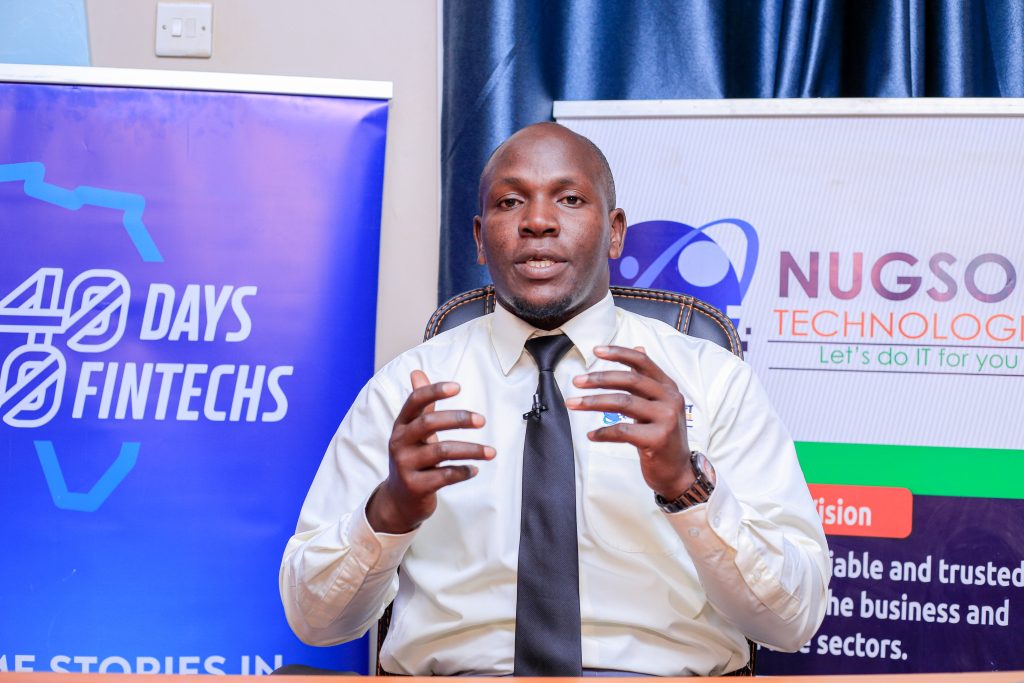
That is where Mfuko Plus comes in handy. This platform is a ‘SACCO Management System’ established and run by Nugsoft Technologies.
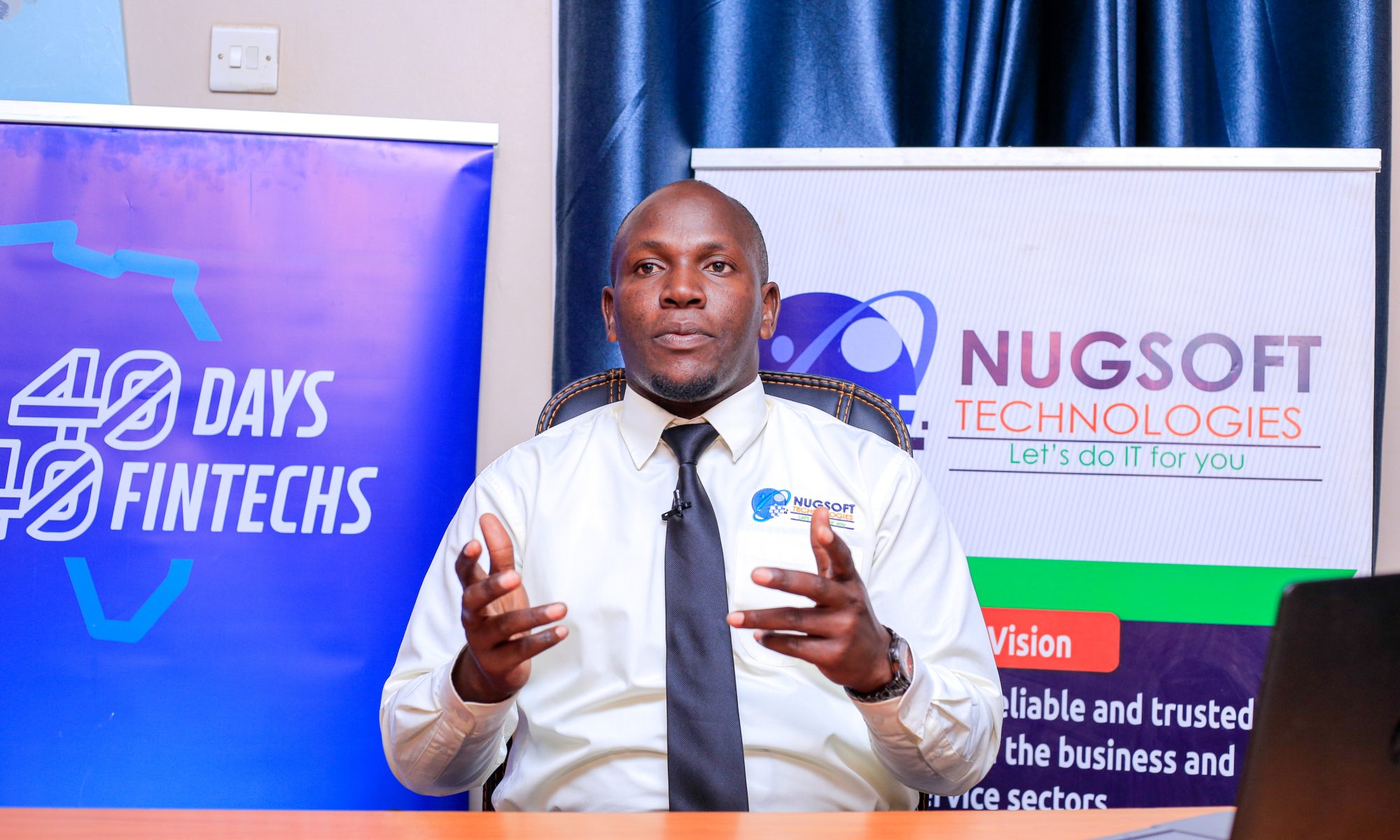
The HiPipo 40 Days 40 FinTechs team had a chat with Darius Mutasi, the Nugsoft Technologies Business Development Manager. Below is his take on how his organization is improving SACCOs, improvement in FinTech, and ongoing Financial Inclusion efforts.
QN: What is Mfuko Plus?
ANS: Mfuko Plus is a credit advisory and records management application. The application manages loans, shares, individual and group profiles, and transactions like savings, withdrawals, and transfers; all provided with standard financial reports and detailed transaction reports. USSD and mobile money services have also been recently introduced to the platform. We work with SACCOs, Microfinance institutions, Savings groups, money lenders, and several other credit institutions.
QN: How does your platform work?
ANS: Mfuko Plus runs as a web application and it has two key modules. One is the main platform where businesses like SACCOs, Microfinance Institutions, and others login in to manage their operations (Loans, savings, and other transactions) while the other is a members’ portal where members of the enrolled businesses can self-register, then log in to check their balances and perform several transactions individually. We mainly enroll financial institutions and for them to start, they just visit www.mfuko.net to contact us or request a demo. All they need is a functional computer and an active internet connection (We shield all businesses against internet costs as all our services are zero-rated).
QN: For the years you have been working, what do your numbers look like?
ANS: We have a total of 22 SACCOs enrolled, over 50 microfinance and money-lending institutions/ individuals and 6 Saving Clubs. Across all these, we have over 12,000 members and we have managed cash-flows of over UGX 22Bn cumulatively and in this year alone, about UGX 7.3Bn.
QN: How is Mfuko Plus supporting women, small businesses and the youth?
ANS: To reduce costs of accessing the service among small businesses and the youth, we recently incorporated SMS services, and USSD and went ahead to zero-rate the service. This means all our members can access the service without loading data. Additionally, we revised our pricing to offer lower rates to youth groups, women saving groups, and village/community-saving initiatives.
QN: As an entity actively involved in the FinTech space, are you implementing Level One Project Principles which are Industry Best Practices such as Tiered KYC, Accessibility on Low-Cost User Devices, Real-time/Immediate funds transfer, Same-day settlement, Pricing Transparency, and Irrevocability?
ANS: We enabled USSD in Mfuko Plus to ease accessibility on low-cost user devices. In terms of transparency, we have standard pricing plans for the different modules with no hidden costs in our billing and all transactions are reported accurately. We also identify aggregators who support real-time funds transfers and same-day settlements in order to facilitate a high level of efficiency, flexibility, and productivity.
QN:What is the state of Uganda’s FinTech Industry?
ANS: The industry is very promising and the players are full of potential. Yes, there are challenges, but the opportunities outweigh the challenges. One of the biggest opportunities is the general adoption of technology across the country; there is a reasonable growth in the use of technology across businesses which presents a big market opportunity. The influx of foreign players to support local FinTechs is also an advantage.
However, there are several challenges like the high cost of transactions, especially among aggregators; the stringent legislation around FinTechs compared to other players in the sector; and the low volume of capital/funding that caps several FinTechs from reaching their potential, among others.
QN: In your opinion, how does the 40 Days 40 FinTechs initiative support the industry? What else must be done to improve the industry?
The 40 Days 40 FinTechs initiative extends great visibility to FinTechs and this eventually creates market and much-needed revenue growth. It has also created a conducive atmosphere where various FinTechs can converge to share ideas, opportunities, and avenues for collaboration; all these are extremely vital and deeply appreciated.
If the initiative can introduce an element of funding in the future (either directly or through its partners), especially for start-up FinTechs that have been part of the initiative, there will be a strong impact on how these FinTechs survive and ultimately, on how they grow.
About 40 Days 40 FinTechs!
Mfuko Plus is participant number 34 in the 2022 40 Days 40 FinTechs initiative. The #40Days40FinTechs platform is run under HiPipo’s Include Everyone program that also encompasses other initiatives such as FinTech Landscape Exhibition, Women in FinTech Hackathon, Summit & Incubator and the Digital and Financial Inclusion Summit and Digital Impact Awards Africa.
It offers participants useful tools and an introduction to the industry’s emerging technologies, such as Mojaloop Open Source Software, and guidance from Level One Project foundational material. The skills gained from this initiative cover Level One Project Principles, Instant and Inclusive Payment Systems (IIPS), Inclusive Finance and FinTech in general.
According to Innocent Kawooya, the HiPipo CEO, despite the rapid adoption of digital financial services, an average of 40 percent of Africa’s adult population remains financially excluded and something must be done.
“Financial exclusion continues due to the lack of interoperable, open-loop, cost-effective, real-time, and secure retail payments systems/switches to digitally connect large numbers of low-income users onto formal financial rails. The 40 Days 40 FinTechs initiative is accelerating discussions on building industry-led Instant and Inclusive Payment System (IIPS) across the East African region and continent.”
The world is slowly migrating into a cash-lite and eventually a cashless global economy where all transactions are done without the exchange of cash. As a result, more financial technology companies (FinTechs) are emerging with a variety of solutions to meet consumer needs.
However, most of these solutions target a fairly literate population that can at least read and interpret mobile phone prompts, leaving out the illiterate and blind population.
It is this problem that PayTota is determined to end with the introduction of an Interactive Voice Response (IVR) solution that allows its customers to interact with a computer-operated phone system through the use of voice.
According to Erasmus Okurut, the PayTota CEO and Co-Founder, while this product is already in use in more advanced economies, PayTota is proud to be the champions of this initiative in Uganda.
“Not everyone can read and operate phones. So, if we want to include everyone, this product is very crucial,” he says.
Pay Tota is a Financial Technology company that designs universal payment solutions with an emphasis on emerging markets targeting mainly insurance providers, e-commerce players, and agri- service providers, among others. They are the 33rd participant in this year’s 40 Days 40 FinTechs initiative that is showcasing impactful and emerging FinTechs across East Africa and beyond.
“We provide a unified payments interface for our clients. Being a Business-to-Business FinTech, we have been able to integrate more than 20 businesses in Uganda and five businesses outside the country,” Okurut says.
Okurut says this integration is facilitated by other payment methods including Google pay, Mobile Money, Visa and Credit Cards, etc, with monthly recurring revenue of more than USD 20,000.
He owes this success to the Covid-19 pandemic that prompted many businesses to reach out to them seeking digital payment services and solutions.
“Covid-19 was an awakening call. We were able to grow within the pandemic and also in terms of the impact, we saw many businesses take up PayTota solutions. In Uganda, we were able to receive over 100 players per month asking for our solutions,” he says.
For better client management, they have implemented different tools at the back-end, the latest being KYC onboarding, which is already being done to help reduce the timelines one needs to get on-boarded to the market.
Okurut highlights that although there are some regulatory challenges, FinTechs in Uganda are generally picking up faster, with more investors taking a keen interest.
“The market is ripe and now is the time to develop solutions that target consumer needs,” he says, before applauding the 40 Days 40 FinTechs initiative that has contributed a great deal in highlighting and exposing startups to the global economy.
“When we first featured on this platform, we were just a startup, but it gave us a platform and we were able to onboard over five clients because of that. Our brand visibility has improved,” he says.
40-Days 40-FinTechs
Now in its third edition, #40Days40FinTechs has quickly grown into one of the world’s premier showcase events for the innovations that are enabling ever more people to join the digital economy space. That is surely going to remain the case, in large part due to the inspiration and collaboration that HiPipo partners Level One Project, Mojaloop, ModusBox, and Crosslake Technologies generate, but mostly because of the continuing generous support of the Gates Foundation.
The initiative offers participants useful tools and an introduction to the industry’s emerging technologies, such as Mojaloop Open Source Software, and guidance from Level One Project foundational material. The skills gained from this initiative cover Level One Project Principles, Instant and Inclusive Payment Systems (IIPS), Inclusive Finance, and FinTech in general.
According to HiPipo CEO, Innocent Kawooya, this year’s edition is cementing the achievements of the previous editions – where over 60 FinTechs have been transformed – but also building on them to leverage digital financial inclusion in East Africa and beyond. “As HiPipo, our extensive effort and advocacy is partly for the intention of championing digital innovation and interoperable instant and inclusive payment systems (IIPS) in Africa to a point where our innovators enjoy and achieve sound profit margins to help them keep designing and deploying affordable and inclusive financial services for the poor,” Kawooya said.
One of the biggest bottlenecks of transferring funds from one country to another is the cost involved, especially if it involves different networks.
It is a problem that MFS Africa; a digital payments hub, is keen on mitigating by providing access to a world of innovative, simple, convenient, secure, affordable, and compliant mobile financial solutions for all.
It connects senders, recipients, and service providers across Africa’s fast-growing yet fragmented mobile payments ecosystem through the establishment of; access to speed and efficiency, access to the global digital economy, access to new options, access to new markets and new customers, access to scale, access to security, and access to endless opportunities among others.
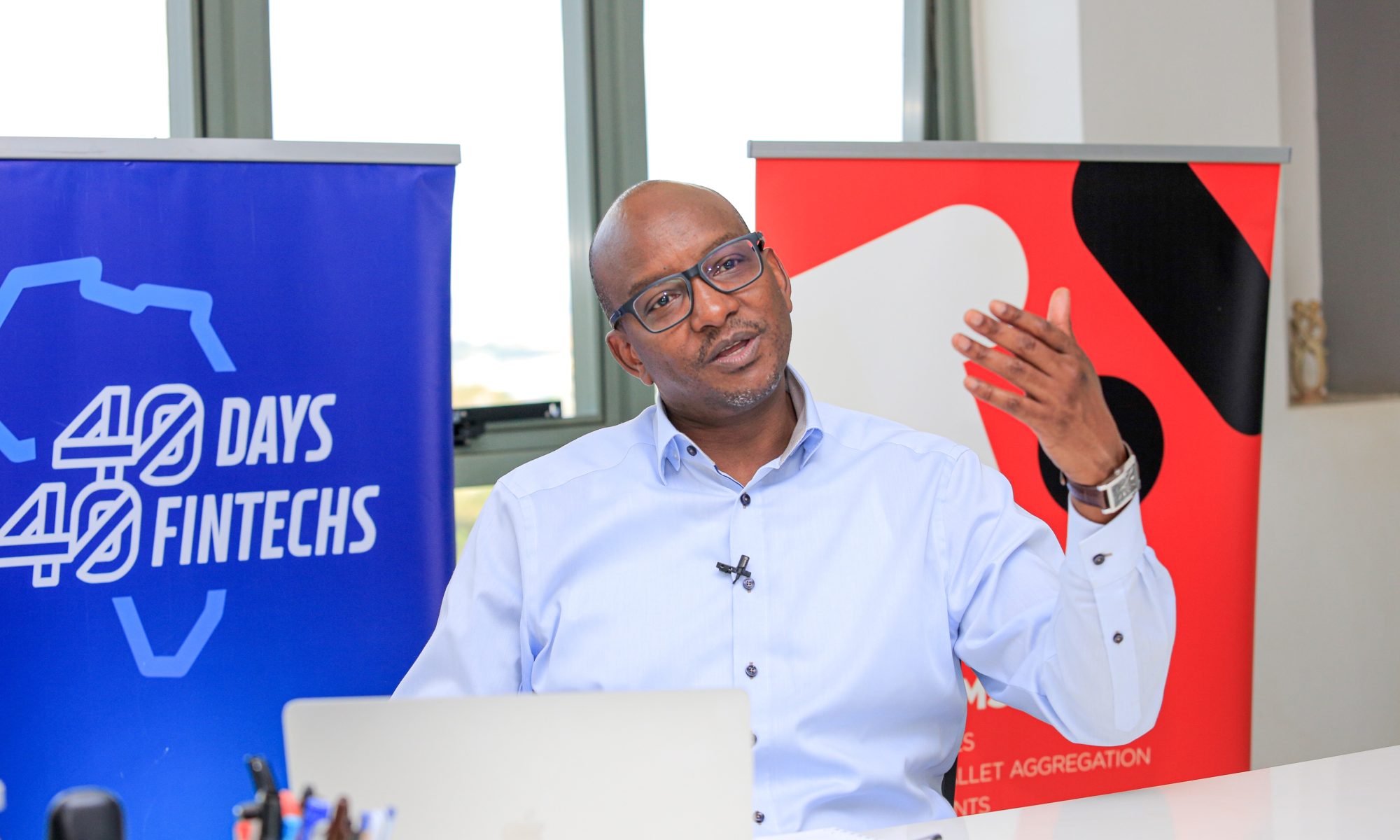
According to Doreen Lukandwa, the VP Global Enterprise at MFS Africa, thisborderless hub acts as a one-stop center for any individual, business, or organization that wants to send or collect money from and to their final consumer in at least 34 African countries.
“The vision for MFS Africa is to make borders matter less. It is not enough to say that we can provide mobile money to people to be able to send money to a family member in Ethiopia, but it is to say that we can provide different sectors with these different solutions that we have within a single hub,” Lukandwa says.
For example, if you are a Ugandan business with a shop on Instagram, if you want a market from a consumer in Arua, you just have to promote the product on Instagram, connect through MFS Africa and you will be able to collect your payment through any of the mobile money networks in the country. So, the customer in Arua can select the item they want on Instagram, make a mobile money payment directly to you and then organize to deliver the paid-for product.
Lukandwa says one of the most powerful components of this platform is interoperability, backed by solid infrastructure that enables people to send money to anyone across the world through partners like WorldRemit.
“The fact that we are connected with over 180 telecoms, banks, and money transfer organizations, means that we are facilitating safe, affordable interoperability. For example, if I am a business in Uganda and I have to pay my staff in Kenya, our platform will actually confirm who the account holder is in Kenya,” she says, adding;
“But also in Uganda if you are paying somebody, our system will actually validate if the person you are paying is the right one. In that regard, we are de-risking payments; we are making it more affordable because of the interoperable capability.”
Lukandwa further notes that the Ugandan FinTech industry has shown significant growth with initiatives that seek to address day-to-day challenges.
“Rocket Health is addressing healthcare challenges; HiPipo is expanding and accelerating technical capabilities among Women in FinTech; SafeBoda is digitizing transportation, etc. The impact is not limited to just what we see here,” she said.
MFS Africa is the 32 (thirty-second) participant in this year’s 40 Days 40 FinTechs initiative that is showcasing evolving FinTechs fostering financial inclusion, especially for the people at the bottom of the pyramid.
Innocent Kawooya, the HiPipo CEO says the job being done by MFS Africa points to the right path in fulfilling the tenets of the broader Include Everyone program.
“As HiPipo, our extensive effort and advocacy is partly for the intention of championing digital innovation and interoperable instant and inclusive payment systems (IIPS) in Africa, and MFS Africa is doing just that. We hope they continue designing and deploying affordable and inclusive financial services that serve the rich and the poor,” Kawooya said.
First launched in 2020, the 40 Days 40 FinTechs initiative is a 40-days event that shines a spotlight on emerging FinTechs with unique stories. It provides a setting for the various players and stakeholders involved in digital and financial technology to exhibit their products and services and also share their ideas on how more people, especially those un-served and underserved by the present financial systems can be brought on board, with emphasis on interoperability.
Run under HiPipo’s Include Everyone program, the initiative offers FinTechs useful tools and an introduction to the industry’s latest technologies such as Mojaloop open source software, and guidance from Level One Project foundational material. The skills gained from this initiative cover Level One Project principles, instant and inclusive payment systems (IIPS), inclusive finance and FinTech in general.
FutureLink Technologies is a community-driven marketplace for affordable financial services. It is licensed by the Bank of Uganda as a digital national payment systems operator.
They work to enhance the financial resilience of Africa’s low and middle-income earners through a community-driven marketplace where consumers access a variety of financial services, mainly credit, most appropriate and affordable for their daily needs.
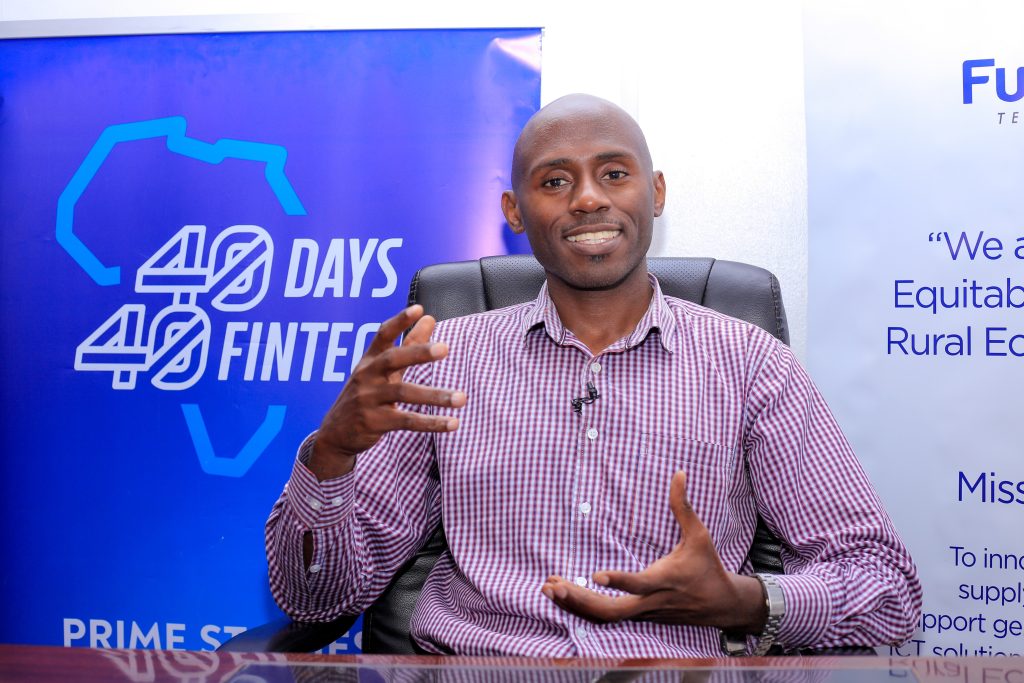
FutureLink Technologies is the 31st participant in this year’s 40 days 40 FinTechs initiative by HiPipo that seeks to highlight emerging FinTechs in East Africa and beyond. The HiPipo team talked to VINCENT TUMWIJUKYE, the CEO and co-founder of FutureLink Technologies, and below is how the conversation went.
QN: Why did you choose the community-based model?
ANS: Africa is fragmented. So, we realized that generic products cannot survive or make an impact in African communities where people are divided around culture, physical boundaries, countries, etc. so, it is better to come up with community-driven initiatives.
QN: So, how does this model work?
ANS: On our platform, we have different players; we have sellers and buyers. We have about 300 SACCOs on the market side of the platform across Uganda. These are providing financial services that are responsive to the unique needs of the people where they hail from. If you come to the buyers’ side, we have different categories. One channel is the Digital channel (M –Saccos) with over 350,000 subscribers. There are those still using branches to transact and they are about 600,000 people.
So, if you go to PlayStore, we have the M-Sacco. You will be able to see hundreds of Saccos showing what they paid and what their return on investment was. You will be able to see the average cost of credit for these Saccos. Seated here in Kampala, you will be able to open an account in a Sacco somewhere in the rural area and start earning dividends and more.
QN: How are you performing in terms of numbers?
ANS: For the year 2021, we moved about UGX 2.7 trillion shillings on our platforms. We also have key performance indicators (KPIs) that measure our impact. We saw that cash flow per member on our platform grew by 14 percent; savings per member remained constant largely because of the Covid-19 effects but we are excited to see that people’s financial resilience is growing.
QN: One of the main tenets of the 40 days 40 FinTechs initiative is to ensure that we ‘Include Everyone”. How do you rate yourselves in this aspect?
ANS: We believe that you cannot include everyone without addressing key barriers. One barrier is affordability. The other is functionality and responsiveness. How does your product respond to the needs of women, farmers, and the youth? That is why we employ the community-based model and work with indigenous cooperatives that target specific groups with specific needs.
Secondly, we prioritize affordability. In Uganda, our platform offers the cheapest credit. At 8.75 percent per annum, you can get a loan on our platform. There are businesses that are still borrowing at 20 percent per month. That is ridiculous. There is no business you can do with credit of 20 percent per month. That is 240 percent per annum. The only business you can do is lending.
If we must build an equitable sustainable economy, we must address the issue of affordability. So, we are happy to see that we are championing the matter of bringing down the cost of credit. Our 8.75 percent is beginning to trigger a conversation about the cost of credit and banks are responding by reducing interest rates. We have proven that you can lend at that rate and be able to remain in the market.
QN: What is the key behind this success?
ANS: For you to be able to unlock the kinds of markets that we serve, you must be transparent. You must be seen to actually work for the people because suspicion is high. If you look at the rural communities that we work with, by default they think that technology is a way of trying to steal their money. If you don’t take an effort to be equitable, and come up with business models that actually work for every stakeholder, then you will not go a long way.
QN: What is your general assessment of the growth of FinTech in Uganda?
ANS: The state of FinTech in Uganda is exciting. We have a regulator who is supportive and a listener. We have quarterly forums with the deputy governor and we think that is healthy. We are also seeing confidence within the population, especially after Covid-19. People understand that this is something they can leverage.
I think there is a keen interest, more than there was before because of the regulation. Venture capital funds are coming in. Uganda’s open free market is exciting. I think other players coming should not be deceived by the idea to push generic products because Uganda is fragmented. You need to have community-responsive products.
QN: What is FutureLink’s biggest achievement so far?
ANS: We have achieved quite a lot. Recently, we were listed among the top 50 most inclusive FinTechs in the world. Think about this, this in comparison with other institutions from all over the world. This was a statement that the work we do for the rural communities, the voice we give to the end consumer, and the catalytic effort we put into the design and delivery of financial services are commendable.
QN:What is your take on the 40 Days 40 FinTechs initiative?
ANS: This initiative provides an opportunity to test ourselves if indeed we are creating an impact in comparison to our peers. It is a great initiative that is shining a light on the entire industry.
Perhaps what could be done with other stakeholders like FITSPA is to build the three pillars of investment. First, we need to bring out the exciting innovations in the media, locally and regionally. We need to have a university that is focused on talent; churning out developers, and business analysts because we have a significant lack of talent. Then we need to build the VC (Venture Capitalists) community.
40-Days 40-FinTechs.
Now in its third edition, #40Days40FinTechs has quickly grown into one of the world’s premier showcase events for the innovations that are enabling ever more people to join the digital economy space. It is organized by HiPipo in partnership with Level One Project, Mojaloop, ModusBox, and Crosslake Technologies and supported by the Gates Foundation.
According to Innocent Kawooya, the HiPipo CEO, FutureLink Technologies is a clear representation of what 40 Days 40 FinTechs is all about – enhancing last mile Financial Inclusion.
“Access to affordable and readily available credit is key to business development and financial inclusion. Targeting people at the bottom of the pyramid is a must if we must achieve financial inclusion. FutureLink Technologies is doing this by empowering Saccos and making their services available to thousands of people. We applaud them and challenge them to achieve even much more.” Kawooya noted.
The 40 Days 40 FinTechs initiative offers participants useful tools and an introduction to the industry’s emerging technologies, such as Mojaloop Open Source Software, and guidance from Level One Project foundational material. The skills gained from this initiative cover Level One Project Principles, Instant and Inclusive Payment Systems (IIPS), Inclusive Finance and FinTech in general.
Agriculture remains Uganda’s top employer, with more than 60 percent of the population involved in agricultural activities. Despite this statistic, the industry is largely underfunded, many farm inputs are counterfeited and there is little support for harvest handling and agro marketing.
By and large, Ugandan farmers are on their own, living at the mercy of middlemen that determine market prices for both farm inputs and produce.
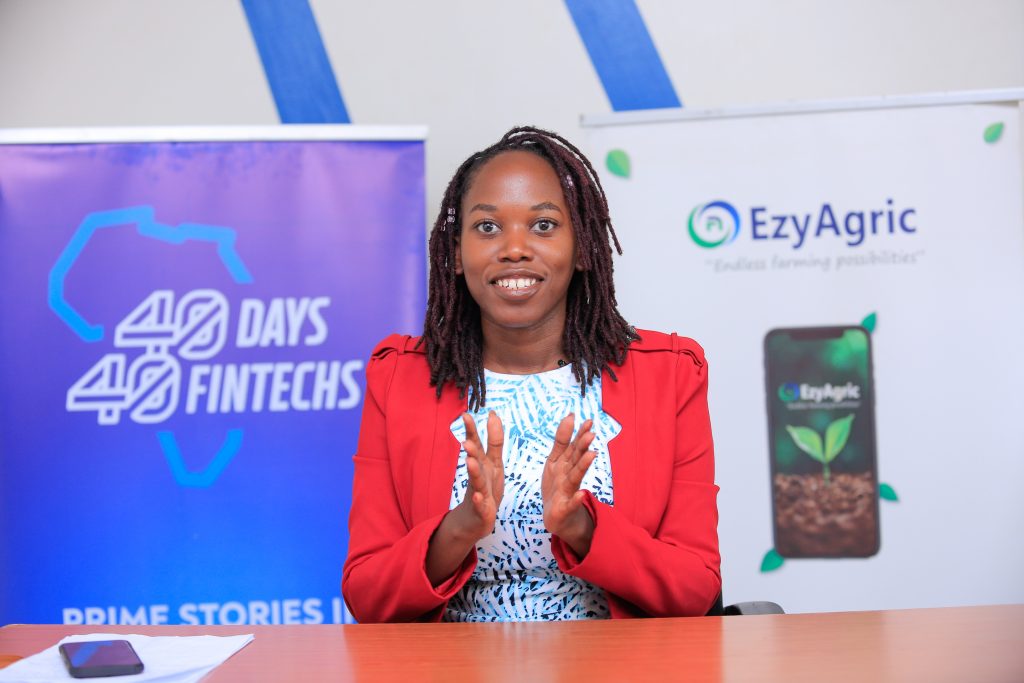
It is these challenges that attract non-government players to chip in with innovative ways of empowering rural farmers. One such player is EzyAgric; an AgriTech and Financial Technology company that has digitized agricultural value chains to provide better production, marketing and financial services to farmers.
“Our mission is to provide end-to-end solutions to farmers so that they have a system that offers digital solutions for planning, extension services, access to affordable credit, and linkages to markets,” says Mercy Angela Nantongo, the EzyAgric Product Manager.
Established in 2015, EzyAgric also offers farmers with periodic weather updates, veterinary information, extension services and connects them to financial institutions for cheap credit.
HOW IT WORKS.
A farmer with a smartphone needs to download the EzyAgric mobile application, sign-in and get a code that they use to access the EzyAgric system for free. Someone without a smartphone can either visit the EzyAgric website or use a USSD code and put in a crop of their choice to get periodic updates.
“When you use either of those channels to access EzyAgric, you can freely access information about agricultural inputs and services. We tell you about vaccines, pesticides, and herbicides. You can request vet visits, soil testing information or market linkages,” she says.
As part of value addition, the platform also provides farm management skills where farmers are given virtual record books to track their income and expenditure. With extension services, farmers receive agronomical information on all crops and animals and it guides them step by step over the season.
“When harvest time comes, we have the agricultural market where the farmer is asked to take a photo of their produce, put price and quantity. We then forward to our produce buyers who contact the farmer and they transact,” Nantongo says.
Since 2015, Nantongo notes, EzyAgric has impacted roughly 300,000 farmers and facilitates transactions worth millions of dollars per season. According to Nantongo, of the 10,000 monthly active users of EzyAgric platform, over 80 percent are women, which has greatly contributed to promotion of women financial inclusion.
To bring services closer to the under-served, Nantongo says they have even initiated an agent-based system where in every village or sub-county, people who don’t have access to a smartphone can get an agent who can register more than 100 farmers to access agricultural information.
The agent manages the group, can place orders for inputs, manage record books and receive market information.
“We also partner with Airtel where you dial a short code and chose the crop of your choice and on a weekly basis get information from us on how to take care of the crop. And when we have buyers for that crop, we send you a message. This specific product has attracted more than 30,000 subscribers from all over Uganda using the product in all languages,” Nantongo says.
FinTech in Uganda
Nantongo notes there is still a big challenge in uptake of digital solutions by most farmers and people at the bottom of the pyramid, with the majority reluctant to trust FinTechs because of lack of physical interactions and the perceived dangers of using of digital money.
EzyAgric is the 30th participant in this year’s 40 Days 40 FinTechs initiative. Organised by HiPipo with generous support from the Bill and Melinda Gates Foundation, that initiative seeks to shine a light on emerging Financial Technology companies that are transforming lives through advancing of financial inclusion to the underserved communities.
HiPipo CEO, Innocent Kawooya paid tribute to EzyAgric as being one of Uganda’s FinTechs with maximum impact.
“Majority of Uganda’s population is somehow involved in agriculture. We are glad that EzyAgric is helping create a value chain between the farmer and the market which will go a long way in creating an agrarian ecosystem. Inputs and markets are always a huge challenge for farmers. It is very encouraging that organizations like EzyAgric have come in to address this and more,” he said.
The #40Days40FinTechs initiative is run under HiPipo’s Include Everyone program in partnership with Crosslake Technologies, ModusBox and Mojaloop Foundation, and is generously sponsored by the Gates Foundation.
It encompasses other initiatives such as FinTech Landscape Exhibition, Women in FinTech Hackathon, Summit & Incubator, and the Digital and Financial Inclusion Summit and Digital Impact Awards Africa.
The initiative offers participants useful tools and an introduction to the industry’s emerging technologies, such as Mojaloop Open Source Software, and guidance from Level One Project foundational material. The skills gained from this initiative cover Level One Project Principles, Instant and Inclusive Payment Systems (IIPS), Inclusive Finance and FinTech in general.
True African is with no doubt among the legends of digital financial services in Uganda. They were among the pioneers of short messages (SMS) and later mobile banking in Uganda working with Nile Bank to transfer funds from one account to another. They even had a website where people would log-in and send free SMS!
But with time, and more players coming into the market, True African has had to pivot to offering back-end services and extending micro-credit to rural farmers and village saving groups and recently, informal traders in urban areas.
“Currently, we do more of aggregation. We assist commercial banks and SMEs to move money from the bank account to the wallet and vice versa. We also help them with bulk payments. We support commercial banks, almost more than half of the commercial banks in the country and ten other microfinance institutions,” says Eric Kamau, the Founder and Managing Director of True African.
On the side of credit, Kamau says for the past five years, their concentration shifted to lending to village saving groups in South Western Uganda as well as potato farmers in Fort Portal where thousands have benefited from micro loans amounting to close to one million dollars.
“We lend these groups between UGX 5 million and UGX 40 million at 3 per cent. The groups take this money and lend it to members at 5 per cent. We make money at the same time providing a social service,” he says, noting that it is fulfilling to see people’s lives changed.
“For instance, there is an old man in Kabaale who, four years ago, wanted to buy a goat at UGX 80,000. He was a member of the first group we lent money to and this man got UGX 80,000. He was able to repay and when I visited him one year later, he had about five goats. That is the impact we want. That is the impact we are creating,” Kamau says.
The same is happening in Fort Portal where True African works with established farmer groups to provide finances for farm inputs.
“Here we lend to potato farmers. We have a mobile application. It is basically a stock management tool used to record the inputs that farmers come to get from us. With recommendation from apex organizations, we give them vouchers to collect pesticides, fertilizers, etc.,” Kamau explains.
At the end of every season, the farmer group (Apex Organisation) collects the harvest for sale and they deduct the cost of inputs that was financed by True African and the farmer takes the balance.
“We have impacted about 100 groups in South Western Uganda (groups have between 30 and 200 members). In Fort Portal, we have dealt with groups of about 700 farmers. That is going to grow to at least 3000 farmers,” he says.
Early this year, Kamau says, they also launched an urban product that targets local dduukas and market vendors who are allowed to borrow in groups.
“We launched on February 14, 2022 and so far have six branches and have impacted close to 2,000 businesses. They borrow between UGX 200,000 and UGX 3m,” he says.
Kamau argues that their vast experience in aggregation, integration and software development has helped them thrive in this new venture because every challenge is addressed in-house almost immediately.
He, however, notes that while their loans are unsecure, they ensure that they conduct the Know-Your-Customer protocols with the help of the groups they work with.
Meanwhile, because the target population are the unbanked rural dwellers, Kamau says more than 90 per cent of the people they serve use feature phones, not smartphones.
“We trained them on how to access credit using USSD codes. A loan is disbursed within seconds of applying because the system already has the KYC information from their groups,” he says.
40 Days 40 FinTechs
Kamau intimates that although the FinTech industry in Uganda is still young, there is much hope since the banking industry now recognizes that they are required.
“Challenge is telecoms and banks are becoming competitors and they have more resources. But we are going to see niches within Uganda that will allow some FinTechs to take off,” he says.
True African are the 29th participant in this year’s 40Days40FintTechs initiative organized by HiPipo that seeks to profile emerging financial technology companies in East Africa and beyond.
HiPipo CEO Innocent Kawooya acknowledged the legendary work done by True African over the years and applauded them for their resilience despite challenges.
“True African have showed us that FinTechs can survive and thrive in this country. We are very happy that they are now targeting the people at the bottom of the pyramid, who are our main target in this initiative,” he said.
The #40Days40FinTechs platform is run under HiPipo’s Include Everyone program that also encompasses other initiatives such as FinTech Landscape Exhibition, Women in FinTech Hackathon, Summit & Incubator and the Digital and Financial Inclusion Summit and Digital Impact Awards Africa.
It offers participants useful tools and an introduction to the industry’s emerging technologies, such as Mojaloop Open Source Software, and guidance from Level One Project foundational material. The skills gained from this initiative cover Level One Project Principles, Instant and Inclusive Payment Systems (IIPS), Inclusive Finance and FinTech in general.
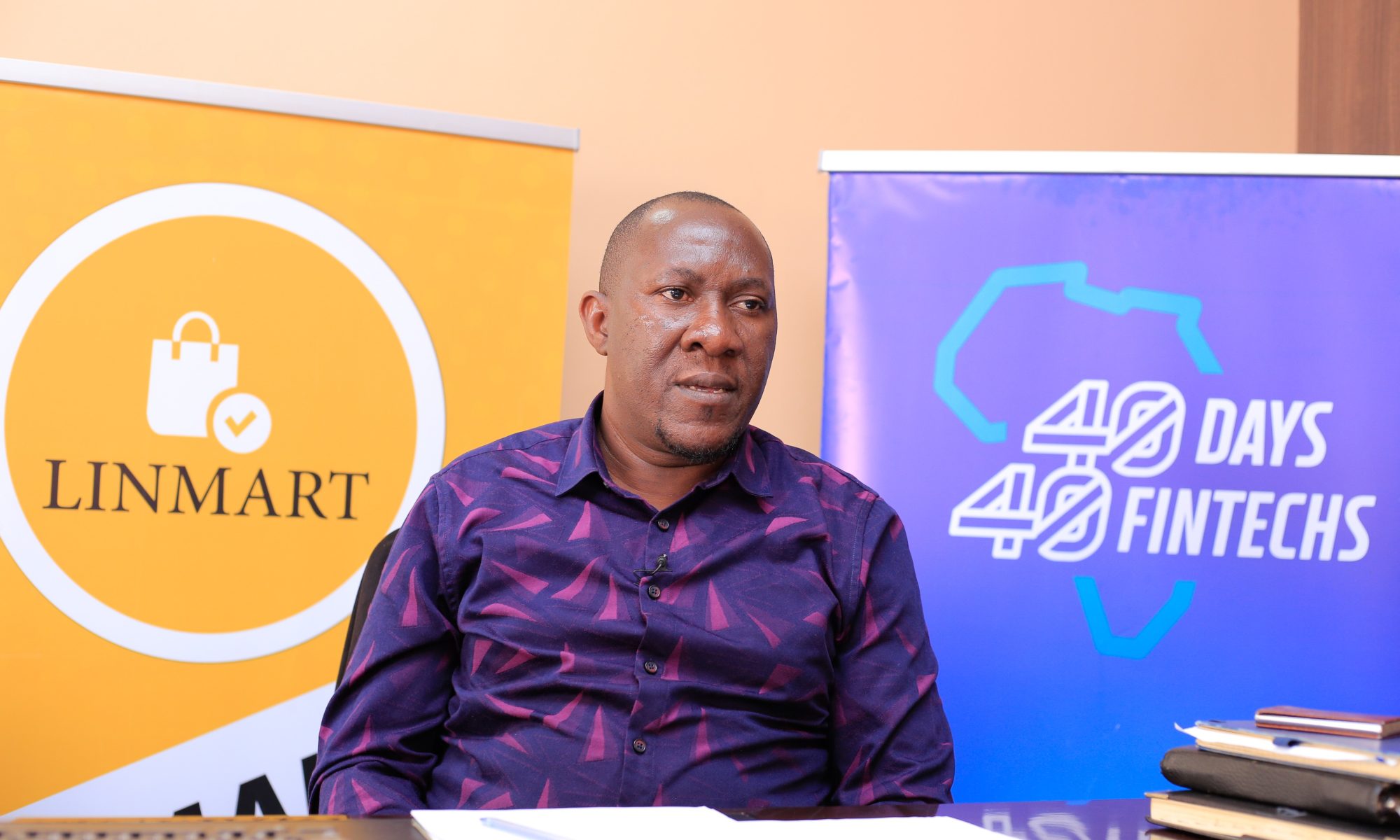
Linmart is an online marketplace that links manufacturers, suppliers, wholesalers, retailers and shoppers to one platform called a MARKET for convenient, timely and cost-effective transactions.
Started in October 2021, Linmart is an easy-to-use product where vendors sign-up for free and buyers just use their smartphones, pads or computers to conveniently contact sellers and access products.
The HiPipo 40 Days 40 FinTechs team caught up with Fredrick Ssenyonga, the Founder and CEO Linmart for a candid discussion on E-Commerce and FinTech. Below are the excerpts.
QN: What was the motivation behind forming Linmart?
ANS: We are motivated by the need for convenience for both buyers and sellers to transact. Finding the market has always been a problem for most businesses; so, Linmart brings the market closer to everyone.
Everyone is assured of finding what he/she wants within no time. For example, businesses can easily contact manufacturers and importers; shoppers are able to identify all that they need; suppliers of both raw material and ready-to-consume products are all able to do business on a trustable platform.
QN: How does one use Linmart?
ANS: They just need a smartphone, pad or computer. When one signs up on Linmart, the system creates an account for them. It could be a vendor account or a consumer account. It’s on this account that shopping money is deposited. However, there are other modes of payment including Mobile Money, Visa card and Credit cards.
QN: What exactly are your products/services?
ANS: We have two products. We have the e-Market and a Linmart Virtual Credit Card. The e-Market is where buyers and sellers link up for business transactions. With the Linmart Virtual Credit Card, a shopper will be able to buy products from any vendor signed up on Linmart on credit and make payment in the following month with a little increment of say 5 per cent.
QN: For the time you have been in business, how do your numbers look like?
ANS: More than 450 businesses have signed up for outlets on Linmart, and a very good number of shoppers visit the online market daily.
QN: In your opinion, what is the state of Uganda’s E-Commerce and FinTech industry?
ANS: To start with, the government embraced the technology era which eases its implementation. Secondly, almost 2/3 of our population constitutes youths who are ready to embrace anything trendy, and technology is no exception. So, FinTech is here at the right time.
Any challenges?
One of the biggest challenges especially with start-ups is finances. It’s costly to implement a technological concept. There are not many investors willing to stake money in start-ups. Loans are complicated and grants/seeds are rare and hard to access. A number of projects are stagnant due to resource scarcity.
QN: What’s your take on the #40Days40FinTechs initiative in supporting the industry?
ANS: The initiative has created exposure for various technology companies. This will help us network, share ideas and do business together. We are grateful to the #40Days40FinTechs initiative.
QN: What else must be done to improve the industry?
ANS: The #40Days40FinTechs initiative can initiate means of soliciting for funds to support businesses in technology. I believe we can use this platform to access grants, seeds or come up with annual fundraisings. This can help businesses, especially start-ups, to scale up.
40-Days 40-FinTechs.
Linmart is participant number 28 for the 2022 40 days 40 FinTechs. Now in its third edition, #40Days40FinTechs has quickly grown into one of the world’s premier showcase events for the innovations that are enabling ever more people to join the digital economy space. It is organized by HiPipo in partnership with Level One Project, Mojaloop, ModusBox, and Crosslake Technologies and generously supported by the Gates Foundation.
The 40 Days 40 FinTechs initiative offers participants useful tools and an introduction to the industry’s emerging technologies, such as Mojaloop Open Source Software, and guidance from Level One Project foundational material. The skills gained from this initiative cover Level One Project Principles, Instant and Inclusive Payment Systems (IIPS), Inclusive Finance and FinTech in general.
According to HiPipo CEO, Innocent Kawooya, this year’s edition is cementing the achievements of the previous editions – where over 60 FinTechs have been transformed – but also building on them to leverage digital financial inclusion in East Africa and beyond.
“40 Days 40 FinTechs initiative is bringing together DFSPs and stakeholders (including regulators and development partners) to drive discussions on building instant and inclusive payment systems that will solve the most emerging challenges that limit low-income users from onboarding onto formal financial platforms,” Kawooya said, adding;
“Thanks to initiatives like 40 Days 40 FinTechs and Level One Project among others, DFSPs, and FinTech stakeholders across Africa will soon gain access to fully functional IIPS regulatory sandboxes to prototype, build and test innovative digital products while evaluating Mojaloop technology with the aim of solving data/infrastructure localization government regulations and directives.”
The outbreak of the Covid-19 pandemic in March 2020 was projected to be a short-term disruption but for some financial firms, it has triggered long-term changes on how to do business.
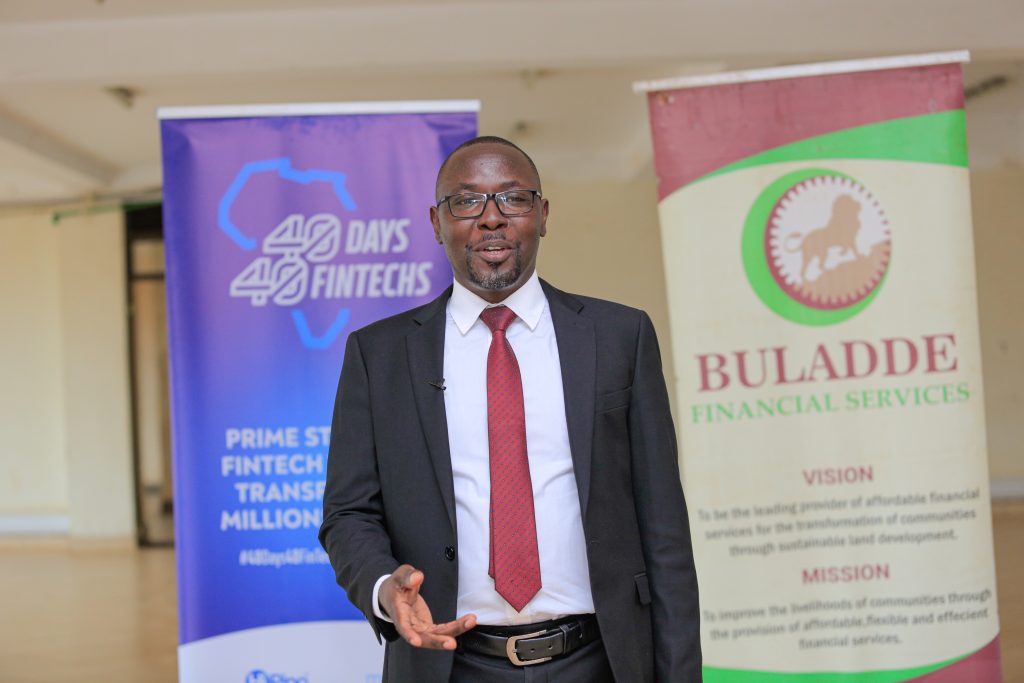
Buladde Financial Services is among the several financial institutions changing operations to suit customer preferences and the new ways of doing business.
Established in October 2016, Buladde seeks to provide an opportunity for its members to improve their security of tenure or ownership of land through voluntary savings and loans.
John Mark Ernest Golooba, the Buladde Financial Services Manager, describes the pandemic as a blessing in disguise because it paved the way for faster digital uptake. The restrictions on movement during the lockdown and the need to work remotely forced management to think differently.
“When we started, we were faced with a challenge of lack of a system in place. We were doing normal excel sheets and analogue-based system. So, we migrated to a digital system in 2021. We wanted to do this before but due to COVID, we were delayed,” Golooba notes, adding:
“The digital platform is meant to extend our services to members without the physical interface. You saw the challenges of the pandemic such as restricted movements but also, we found it costly for people to move as areas of operations were out of reach.”
“So, digital services were very important in ensuring that our members are served better. We migrated to an online system and we have been cleaning our data to have all the required information to serve them better.”
According to Golooba, Buladde currently has 2,459 active members including about 1,600 who are accessing credit services.
He explains that loans being serviced by its members amount to over UGX1.8 billion. The loans were given to ensure that the members have access to affordable credit facilities for the betterment of their social, economic, and financial conditions.
Buladde Financial Services is participant number 27 in the 2022 40 Days 40 FinTechs initiative, organized by HiPipo in partnership with Mojaloop, ModusBox, Crosslake Technologies, Level One Project, and supported by the Gates Foundation.
Golooba is appreciative of the initiative noting that it is helping players learn more about digital financial services. He nonetheless notes that the costs involved in digital financial services are a hindrance to faster adaption, an issue that further delays financial inclusion.
Run under HiPipo’s Include Everyone program that also encompasses other initiatives such as FinTech Landscape Exhibition, Women in FinTech Hackathon, Summit & Incubator and the Digital and Financial Inclusion Summit and Digital Impact Awards Africa; the #40Days40FinTechs platform aptly provides a setting for the various players and stakeholders involved in digital and financial technology to exhibit their products & Services and also share their ideas on how more of us, especially those unserved and underserved by the present financial systems, can be brought into the fold.
The 40 Days 40 FinTechs initiative offers participants useful tools and an introduction to industry’s emerging technologies, such as Mojaloop Open Source Software, and guidance from Level One Project foundational material. The skills gained from this initiative cover Level One Project Principles, Instant and Inclusive Payment Systems (IIPS), Inclusive Finance and FinTech in general.
Innocent Kawooya, the HiPipo CEO applauded Buladde Financial Service for the progress achieved so far, noting that in the last three years Buladde has grown from a pure cash organization to cash-lite currently.
“When we first engaged Buladde, they were largely a cash organization. However, Golooba and his team have been committed to transforming the organization. It is not surprising that they have now introduced a digital financial management system. We are committed to continuing to help organizations like Buladde in their efforts to achieve total digitization,” Kawooya said, adding;
“Despite the rapid adoption of digital financial services, an average of 40 percent of Africa’s adult population remains financially excluded. Financial exclusion continues due to the lack of interoperable, open-loop, cost-effective, real-time and secure retail payments systems/switches to digitally connect large numbers of low-income users onto formal financial rails. The 40 Days 40 FinTechs initiative is accelerating discussions on building industry-led Instant and Inclusive Payment System (IIPS) across the East African region and continent.”