Enimiro Online aiding financial inclusion through farmer-consumer model

By Our Writer

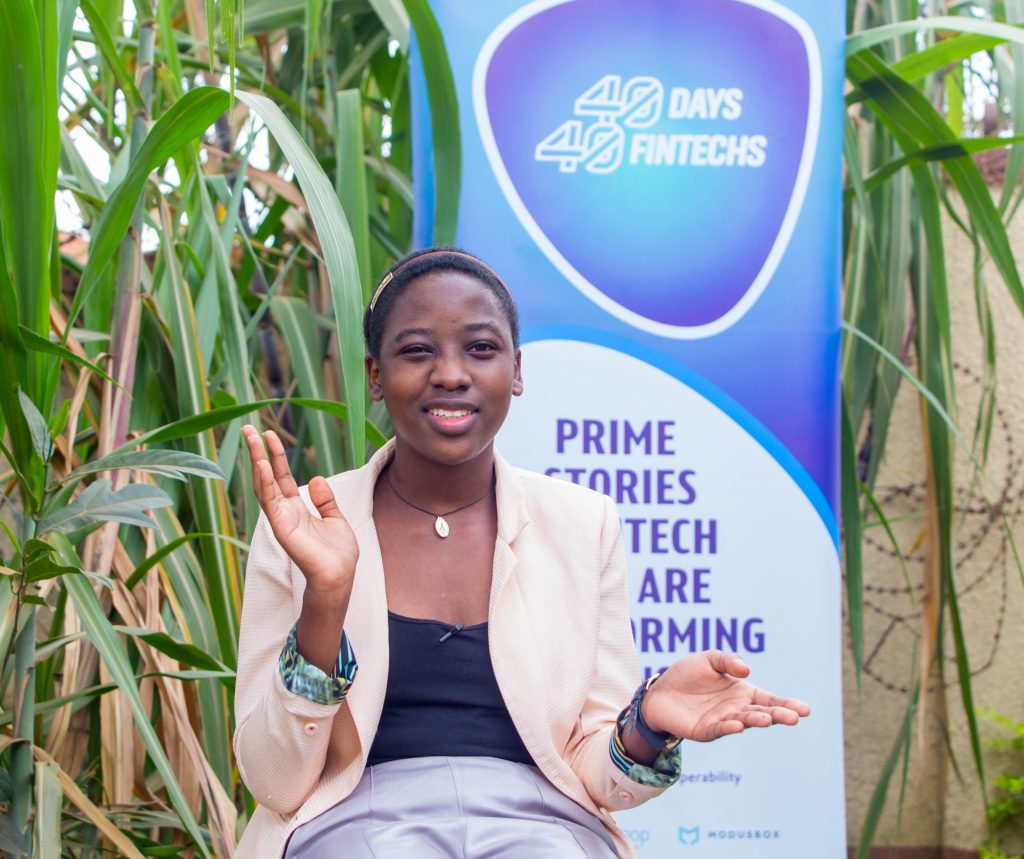
People bored of buying food stuffs, fruits and meat that have stayed long on market stalls may have a reason to smile now that they can enjoy fresh products directly from the garden to their kitchen, thanks to Enimiro Online.

Enimiro Online was established to aid last-mile financial inclusion through connecting farmers directly to consumers.

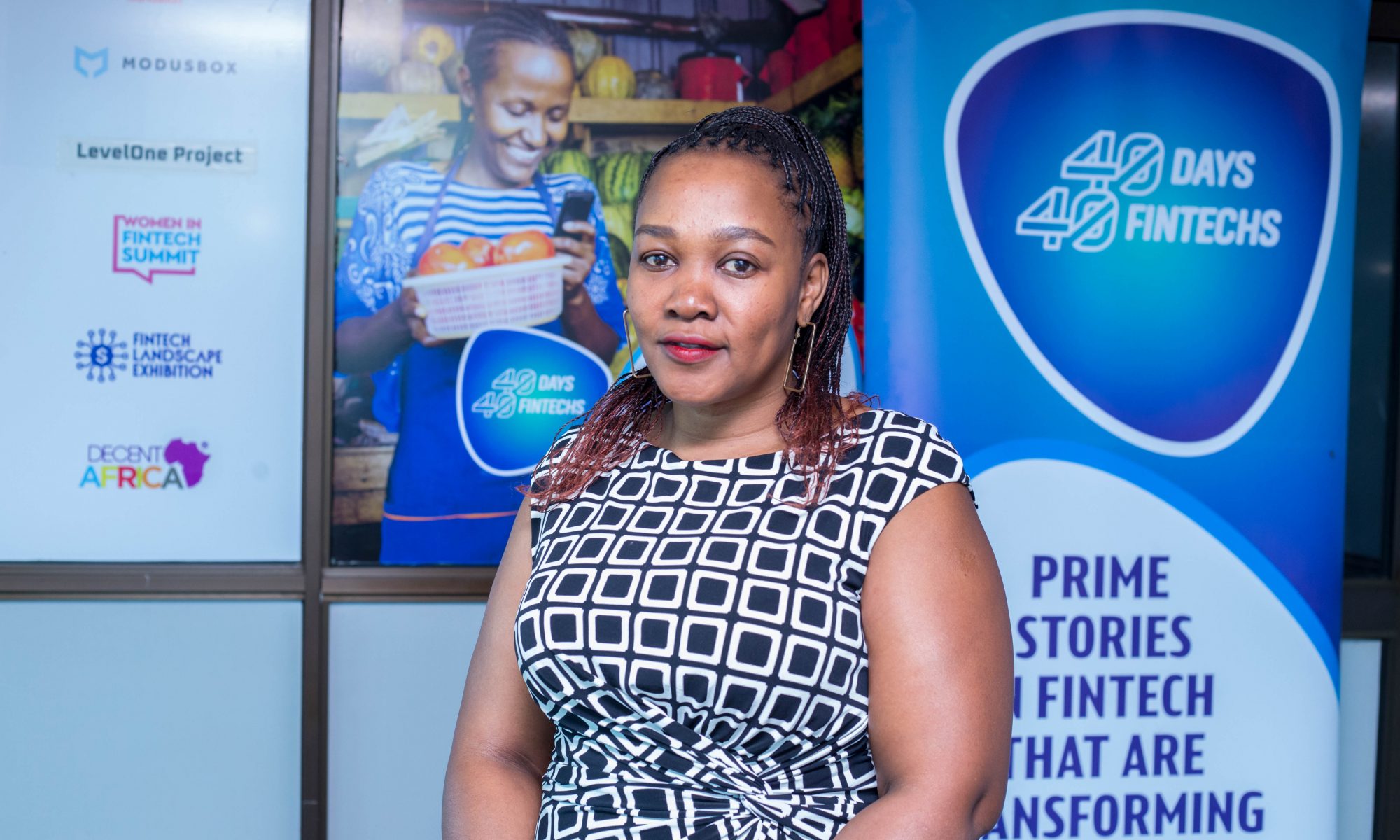
The firm’s General Manager Sarah Gimogoi says they target customers that are interested in purchasing and consuming foods freshly got from the garden, such as fresh foods, vegetables, fruits, poultry, livestock, fish and honey, among others.

“We are the one stop centre for buying a whole goat, poultry, fish and organic honey among others and we plan to add coffee and herbal products,” Gimogoi explains.

She adds: “We have been working on this Enimiro product for the last one year and we now believe that we have got enough market information, contacts and goodwill to deliver 100 per cent organic foods to our customers.”

According to Gimogoi, they joined the e-commerce space to offer a unique product that leverages technology to improve the livelihood of consumers and farmers.

“Uganda is an agro-based country; unfortunately, most farmers are struggling to get a ready market for their produce yet they also struggle to grow these products.

“But it is more annoying that after them going through a hard season, they harvest and fail to get a market! We want to change this,” she says.

Previously, the firm has been running a garden-market and final consumer model.

The Enimiro platform uses Level One Best Practices such as Real Time Payment and Same Day Settlement.

“We have signed strict contracts with suppliers. The same way, we want customers to pay us immediately, is the same way we must pay farmers promptly,” Gimogoi notes.

Its order payments are managed by Flutterwave; another FinTech with operations across Africa.

Enimiro Online is among the firms participating in the ongoing second edition of the 40-Days 40-FinTechs programme, organized by HiPipo in partnership with with Crosslake Technologies, ModusBox and Mojaloop Foundation, and sponsored by the Gates Foundation.

The initiative seeks to enable FinTechs to innovate solutions that facilitate cross-network financial transactions at minimal risks to enhance access to financial services.

Gimogoi applauded HiPipo for the programme, saying it has provided them a platform to learn more about how this industry works.

“Enimiro as a brand is new but its founding partners are not novices. We have been in the industry for some time and are ready to use technology to contribute to last-mile financial inclusion,” she notes.

The HiPipo Chief Executive Officer Innocent Kawooya alludes that there is need for FinTechs to be prepared with appropriate products and have appropriate real time payment systems in place to support an inclusive, interoperable digital marketplace that is both thriving and safe.

He adds that he believes that, just like last year, FinTechs will take up the challenge and use the current opportunity to ride the wave of appreciation for cashless payments brought by the COVID-19 pandemic.

Enimiro Online can be accessed on www.enimirolife.com  

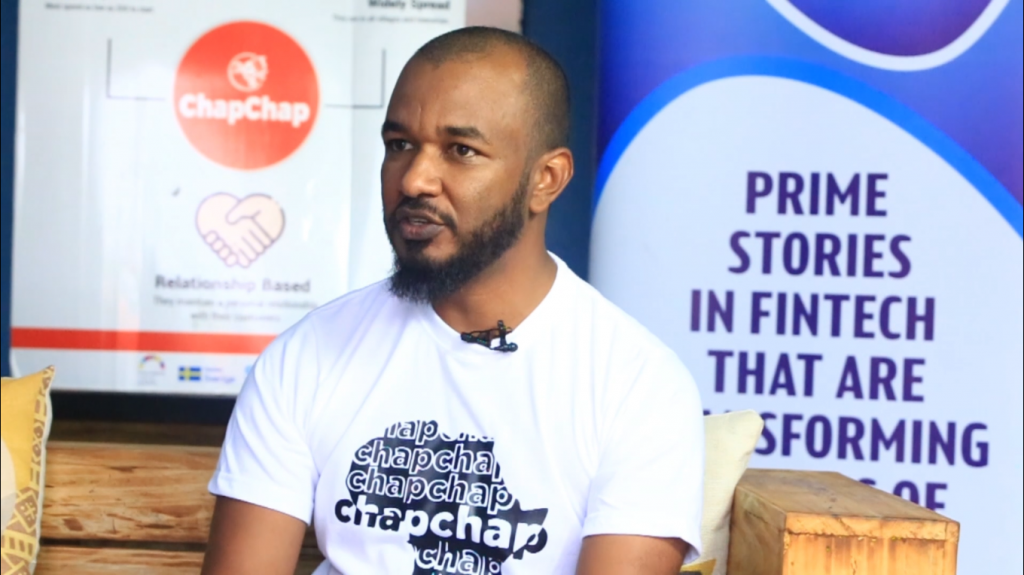
ChapChap Africa is enabling Micro, Small and Medium Enterprises to trade

By Our writer

Despite contributing immensely to Uganda’s Gross Domestic Product and employing the largest number of Ugandans, Micro, Small and Medium Enterprises (MSMEs) face a multitude of challenges, including limited access to credit.

Commercial banks do not want to extend credit to these entities as they are considered risky, have no collateral and most of them have unregistered businesses.

Identifying this gap in the market, ChapChap Africa, a low cost mobile payment application (App), sought to bridge it by bringing MSMEs into a digital age and enable financial inclusion for them and their customers.

Emmanuel Emodek, the Team Lead at ChapChap Africa says that with the App, MSMEs are able to tap into extending financial services such as mobile money to do deposits, withdraw as well as bill payment services in just five minutes.

“If you want to access mobile money right now as a service, 90% of businesses would fail to access it because they do not have formal documents like a bank account that has been operational for six months. They would also fail to tick the box of being a registered business. They would also fail to raise a minimum of $400 to be able to access the lines,” he says.

Emodek explains that in partnership with telecommunications companies, ChapChap has been able to aggregate and lower these requirements close to zero so as to increase the uptake of these solutions.

“Today if you want to run a mobile money business or a bill payment solution in this country through the ChapChap platform, it will take you five minutes to be on-boarded.

“All they need is an application, $5 (UGX20,000) and a simple Know-Your-Customer (KYC). They do not have to have a bank account and they are able to start running business immediately,” Emodek says.

In a span of three years, Emodek says about 17,000 businesses have been on-boarded.

The ChapChap mobile payment platform was launched in 2017 in Uganda, initially allowing customers to pay for digital goods and services and do online shopping while earning cashback on their transactions.

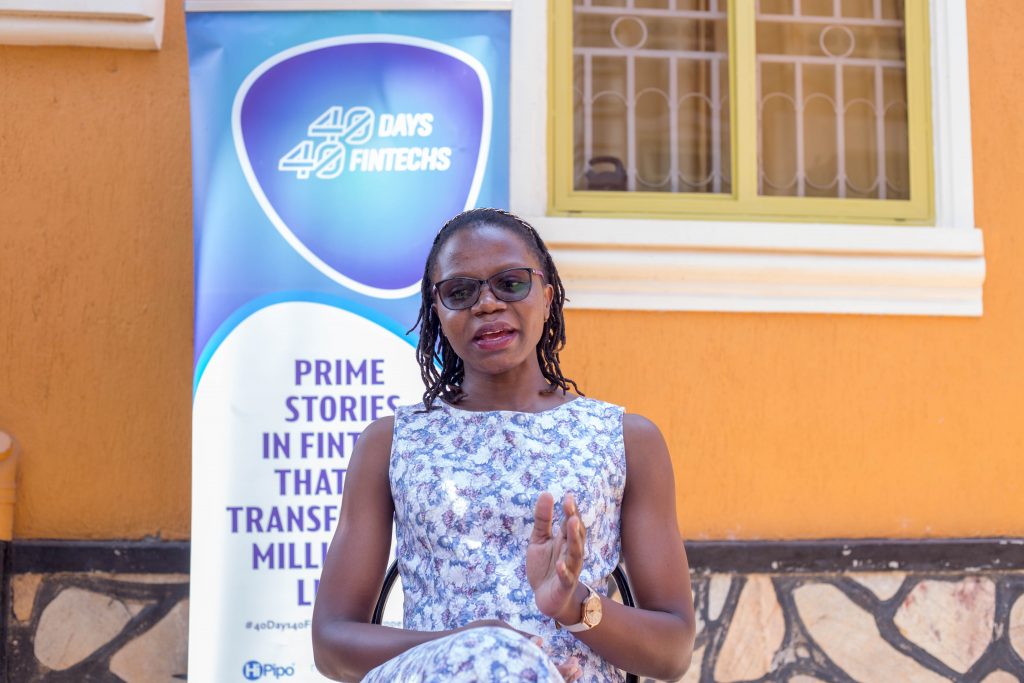
Further, Agatha Kyozira, a member of the Customer Support Team at ChapChap Africa notes that by introducing the digital economy to MSMEs’ day-to-day activities, ChapChap Africa has created credible financial profiles for these businesses, which has indirectly opened for them multiple credit opportunities.

“These businesses today have been able to tap into these financial institutions to be able to access credit. We want inclusion for everyone; if we level the playing ground, we will eliminate so many things that hinder businesses from participating,” Kyozira said, adding;

“This is in line with our goal of ensuring that these enterprises are seen, have access to manufacturers, financial institutions, governments and a fair advantage to compete thereby improving the livelihood of women and youth by providing employment for sustainable development.”

40-Days 40-FinTechs

ChapChap Africa is among the firms participating in the on-going second edition of the 40-Days 40-FinTechs programme, organized by HiPipo in partnership with Crosslake Technologies, ModusBox and Mojaloop Foundation, and sponsored by the Gates Foundation.

Emodek commended HiPipo for the initiative, saying that it has created for them the much needed visibility.

“Developing a product is the easiest bit but marketing it is the hardest and most expensive. A lot of Tech organisations have less spend on marketing because they cannot afford the mainstream media.

“We mainly serve the low income people market; if you charge them high, they shy away from the product. So the charge has to be low. But if you went to a media organisation to place an advert, what they ask for would kick you out of business,” he says.

He adds: “But 40-Days 40-FinTechs is that moment in life where you are in darkness then someone shows up with a candle and says I am going to amplify you.”

The HiPipo Chief Executive Officer Innocent Kawooya alludes that FinTech is the launchpad on which the promise of full global financial inclusion will be fulfilled.

“The 40-Days 40 FinTechs LevelOneProject shall show we have the innovators to take on the challenges,” he says.

He, however, notes that FinTechs need to be prepared with appropriate products and have appropriate real time payment systems in place to support an inclusive, interoperable digital marketplace that is both thriving and safe.

Raxio Data Centre to smoothen integration, aggregation for FinTechs

By our writer

While there has been growth in the number of Financial Technology Companies (FinTechs) integrating with telecoms and banks to facilitate easy payments and access to financial services, many will attest that the process is not that easy.

It involves holding discussions with different institutions before they can agree to pair (peer) with them over the internet.

This is, however, set to change, following the establishment of Raxio Data Centre in May this year. The first Tier III data centre in Uganda, it allows any fibre service and cloud service providers to connect and provide fast and uninterrupted services to their clients.

The Raxio Data Centre Uganda General Manager James Byaruhanga says that FinTechs can now integrate easily, using Raxio’s internet exchange point that enables direct peering to allow cross-connection with banks, telecoms and government organisations under the same roof.

This also eliminates risks that come with peering over the internet such as cyber security risks, red tape, bureaucracy and performance and latency.

Byaruhanga notes that data centres which provide carry-neutral and cloud-neutral services have become the centre stage of the digital revolution and are the heartbeat of the ecosystem of internet globally.

“If anyone wants to be part of the growing fourth industrial revolution and have their equipment in a location that is predictable, stable and ensures endless connectivity to your customers, a data centre is a place you want to be,” he says, adding that the evolution of carry-neutral certified data centres has been a cornerstone of a lot of development in the internet revolution.

Co-location services

Raxio will also provide co-location and cross-connect services to Ugandan companies for better service provision.

“Imagine you are a Ugandan FinTech but you are either going to take up a cloud service somewhere you sometimes  don’t even know or you are going to have your in-house servers which sometimes are interrupted.

“Raxio provides an environment where when you are using your own servers, you can bring them and put them in our facility for much better service level to provide to your customers or you can buy a cloud service that is sitting in our data centre with one of our cloud service providers.”

Byaruhanga says they are in discussion with global service providers like Amazon Web Service, Microsoft and Google to have them extend their networks into Uganda, given that Raxio meets global standards.

Uganda is the first of the 12 countries Raxio Group plans to roll out. He says they have already broken out in Ethiopia as the second country and they are soon starting construction in Kinshasa, DRC.

The other countries are Mozambique, Tanzania, Zambia and Namibia, among others.

Despite existing risks, Byaruhanga says there are opportunities in the market especially given the huge data FinTechs generate, saying it is a goldmine for analytics to innovate the right products that meet consumer needs.

Raxio Data Centre is among the firms participating in the ongoing second edition of the 40-Days 40-FinTechs programme, organized by HiPipo in partnership with Crosslake Technologies, ModusBox and Mojaloop Foundation, and sponsored by the Gates Foundation.

The initiative seeks to enable FinTechs come up with solutions that facilitate cross-network financial transactions at minimal risks to enhance access to financial services.

The HiPipo Chief Executive Officer Innocent Kawooya says this year’s edition is Uganda’s most comprehensive foray into things like distributed ledger technologies, Artificial Intelligence, Big Data, Automated Customer Relationship Management, cash management and lending platforms.

He urges FinTechs to take advantage of the current COVID-19 pandemic to innovate more cashless payment solutions.

“We believe that, just like last year, FinTechs will take up the challenge and use the opportunity to ride the wave of appreciation for cashless payments the pandemic has brought,” Kawooya says

“We need to be prepared with appropriate products and have the appropriate real time payment systems in place to support an inclusive, interoperable digital marketplace that is both thriving and safe.”

 www.raxiogroup.com and on all social media platforms

Pesajet is providing low-interest school fees and agricultural loans

By Our writer

Spending a day or a week at home for lack of school fees is something that no parent would wish their child to experience.

Due to various challenges, however, parents find themselves stranded with their children who have been sent back home to collect fees.

To support such parents, however, E-Moments, a multi-business company that does events management, set up a payments business Application dubbed Pesajet, which, among others, offers a School Advance solution that seeks to aid the school fees challenge.

According to E-Moments Limited Chief Executive Officer and co-founder Emily Sonia Nakabuye, the solution offers low-interest loans to parents to pay their children’s school fees to avoid inconveniences.

Pesajet also offers services in agriculture and utilities, among others.

As part of the company’s women empowerment agenda, women enjoy lower loan interest rates compared men.

“If men take out loans at 5% interest rate, women will be charged 3%,” Nakabuye says.

She adds that Pesajet seeks to include everyone by ensuring that their loans are accessible and affordable for both men and women.

Pesajet uses technology such as Java, API programming and Mojaloop. Nakabuye notes that they are also encrypting Mojaloop with the open-loop systems so that everyone is able to transact cheaply, irrespective of the digital financial service provider they are using.

Additionally, she says that Pesajet is also using the Account lookup service provided by Mojaloop and notifications to enable people get updates about Pesajet or get transaction alerts through SMS. 

Nakabuye notes that Pesajet is also working on smoothening its user interface and make it accessible and easy to all users.

“We have heard statements like wow! Their application is really nice; it is very easy to use, I would recommend it to anyone. That is the feedback we want to get from our customers when they use our application,” Nakabuye notes.

She notes that Pesajet is a believer that low cost user devices are key in driving financial inclusion, and notes that Pesajet is trying to ensure that its App is accessible, irrespective of the device one is using.

In a bid to ensure low cost, Pesajet is trying to make its App as affordable as possible so as to cater for the last-mile person.

The Pesajet App can be downloaded from the Google Play store.

40-Days 40-FinTechs

E-Moments Limited, which was started during and also participated in last year’s Women in FinTech Hackathon, is among the firms participating in the ongoing second edition of the 40-Days 40-FinTechs initiative, organized by HiPipo in partnership with with Crosslake Technologies, ModusBox and Mojaloop Foundation, and sponsored by the Gates Foundation.

Nakabuye expressed gratitude to HiPipo for the 40-Days 40-FinTechs programme, which she says provides a platform for enhanced visibility to get more customers.

Additionally, she notes, it provides a platform for them to learn from the various FinTechs participating in the programme by listening to the many great stories and getting many good ideas from industry stakeholders.

She, however, expresses concern that the FinTech industry is facing a number of challenges including fraud, high cost and digital illiteracy.

Alluding to the numerous innovative ideas being showcased, the HiPipo Chief Executive Officer Innocent Kawooya notes that this year’s edition of the 40-Days 40 FinTechs is Uganda’s most comprehensive foray into things like distributed ledger technologies, Artificial Intelligence, Big Data, Automated Customer Relationship Management, cash management and lending platforms, among others.

He adds: “We need to be prepared with appropriate products and have the appropriate real-time payment systems in place to support an inclusive, interoperable digital marketplace that is both thriving and safe.”

Pesajet can be accessed on www.pesajet.com

Kanzu Money eases bulk payments for Micro, Small and Medium Enterprises.

By Our writer

Many businesses always find themselves entangled in non-core business functions and end up giving little time to core operations, which affects their operations.

Payments are one of those non-core operations that businesses, especially the Micro, Small and Medium Enterprises (MSMEs) tend to spend a lot of time on.

To help them manage their daily payments needs without interrupting their core business operations, however, Kanzu Code, a software development company, came up with an aggregation solution dubbed Kanzu Money to enable MSMEs conveniently, effectively and securely make bulk payments.

According to the Kanzu Code Software Engineer Patricia Atim, the solution allows businesses make bulk payments to their employees, suppliers and vendors, among others, in a single click.

The system uses a Comma Separated Values (CSV) file where all the details including particulars to the people to be paid and the respective amounts, are input and then uploaded onto the web-based Application (App) system to effect the payments, accordingly.

The solution is an interoperable as it uses the Mojaloop software. This means that payments can be effected from the system to any mobile money service provider or bank, effectively and at the same cost.

“This solution helps a small business owner that needs to make several payments yet the recipients are on different networks yet they have to pay via mobile money,” she explains.

She adds: “Imagine if you have 50 people to pay daily; making a single payment at a go to all those people is a lot of work. This means that you either have to carry the money with you to pay them or look for a money agent and ask them to pay one by one. The whole process is tiring and cumbersome.”

The solution not only eliminates the risk of carrying cash but also enables a business to make payments at once to all the people instead of having to pay each, one by one.

Kanzu Code also offers other solutions including custom digital solutions, online stores and Kanzu jobs, among others.

Having a bias towards women’s financial inclusion, Atim says that Kanzu Code plans to roll out a strategy to create initiatives that will be tailored specifically to encourage women to sign up.

She notes that four in 10 MSMEs are owned by women, yet most women are unhappy with the current FinTech solutions on market as they were not responsive to their needs.

Kanzu Code, which participated in the first ever Women in FinTech Hackathon last year, implements Real-Time payments and Same-Day settlements, which are among the financial inclusion principles.

They are among the firms participating in ongoing second edition of the 40-Days 40-FinTechs programme, organized by HiPipo in partnership with Crosslake Technologies, ModusBox and Mojaloop Foundation, and sponsored by the Gates Foundation.

Atim commends HiPipo for the programme, saying it has played a major role in publicity and raising awareness about the crucial role FinTechs play in the country.

While Uganda’s FinTech industry is steadily growing, Atim notes that there are a number of challenges including the prohibitive regulations and policies, high cost of lending and difficulty of attracting funding from investors.

The HiPipo Chief Executive Officer Innocent Kawooya, however, says that FinTech in Africa offers attractive opportunities and that investors are rightfully picking interest in the various startups offering a plethora of services, ranging from payments and lending, remittances and cross-border transfers, among others.

He explains that the 40-Days 40-FinTechs initiative seeks to boost the African FinTech ecosystem to enable innovators enjoy sustainable profitability to help them design and deploy affordable and inclusive financial services for the poor.

Kanzu Code can be accessed on www.kanzucode.com

Kuzimba Online is the digital one stop centre for all building materials.

By Our writer

From bricks and cement to painting, plumbing and décor services, anyone undertaking a construction project can now access them under one roof, just with the click of a button, thanks to Kuzimba Services.

Established in April 2020, Kuzimba Services, the online web Application, aids estate, site or home building by providing fast engineering solutions and making purchases of building materials easy.  

According to Kuzimba Services Business Store Manager, Ephrance Eunice Namugenyi, people no longer have to physically move looking for the materials as they can now be accessed online and delivered at their construction site.

Additionally, the firm also provides access to building experts, carpenters, architects, interior designers, cleaners and engineers and travel insurance, among others.

Namugenyi says that once one visits the business website; www.kuzimbaservices.com, they create an account by inputting all their details before they can proceed to make the different purchases for the needed building materials.

“When one gets online and they register; Kuzimba gets a message that someone has initiated a purchase of a certain material. When we get the email, we send them an RFQ and a work plan, depending on the material they have requested for.

“They then sign on the document and send it back and we make the necessary arrangements for the clients to receive their order. At Kuzimba Services, we give you reliable service delivery in the fastest time possible as long as you sign up and keep an account with us,” she explains.

Kuzimba Services participated in the Women in FinTech Hackathon in September 2020, which Namugenyi says created for them visibility and addition to exposing them to latest financial technology trends and new technologies.

The participation in the Hackathon saw them develop a cash management system, a fundamental requirement for any online business, which has enabled them operate efficiently.

40-Days  40 FinTechs 

Kuzimba Services is also participating in the ongoing second edition of the 40-Days 40-FinTechs initiative, organised by HiPipo in partnership with Crosslake Technologies, ModusBox and Mojaloop Foundation, and sponsored by the Gates Foundation.

Namugenyi alludes that the platform is an opportunity for Kuzimba Services to be marketed and to grow to another level.

The HiPipo Chief Executive Officer Innocent Kawooya also alludes that the 40-Days 40-FinTechs initiative seeks to boost the African FinTech ecosystem to enable innovators enjoy sustainable profitability to help them design and deploy affordable and inclusive financial services for the poor.

Kawooya adds that FinTech is the launch pad on which the promise of full global financial inclusion will be fulfilled. He also notes that FinTech in Africa offers attractive opportunities as investors are rightfully picking interest in the various startups that are offering a plethora of services.

Customer-centricity helping Alpteq develop solutions to people’s financial needs

By Our writer 

It is one thing to develop a financial solution and another thing for that solution to be accepted in the market.

It is for that reason that Alpteq, an ICT Solutions a company that specialises in software development, decided to take a customer-centric approach in product development, to ensure that the financial solutions brought to the market address the target audiences’ needs.

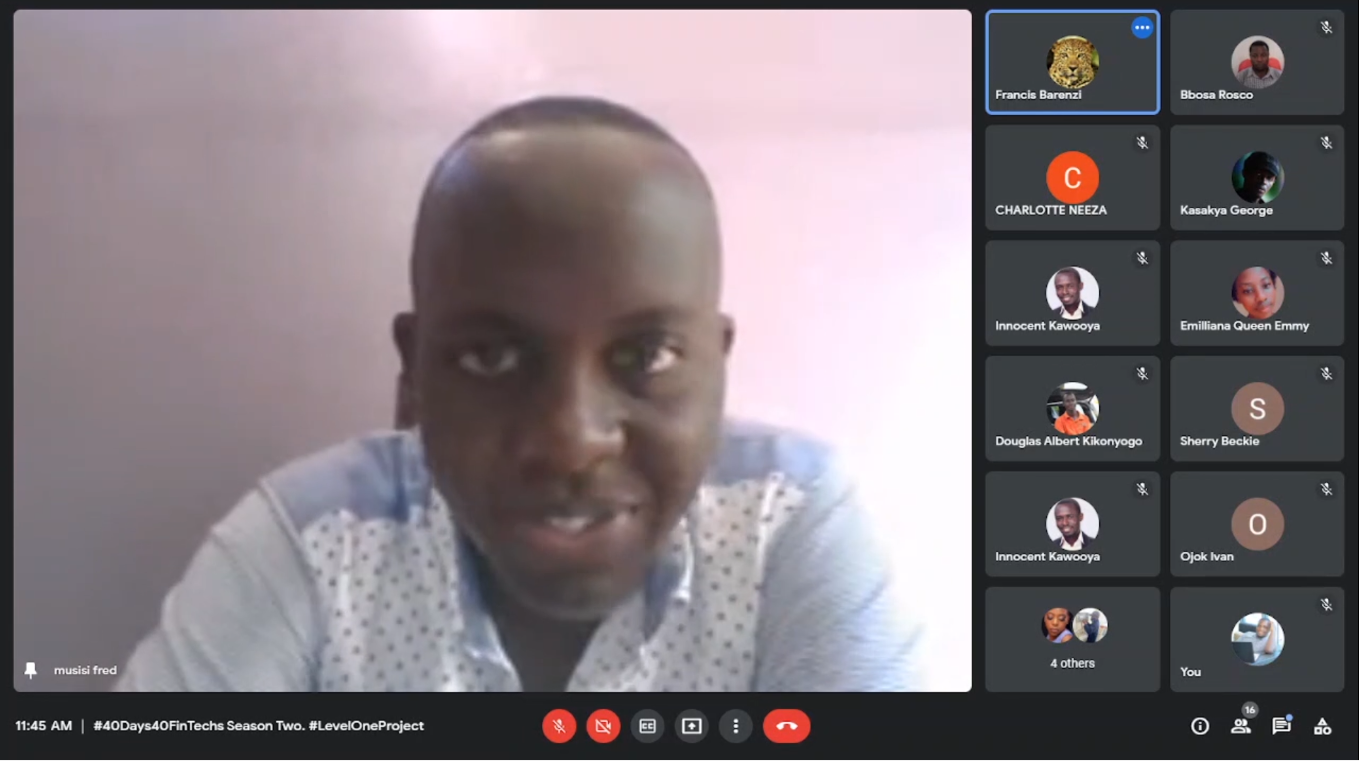
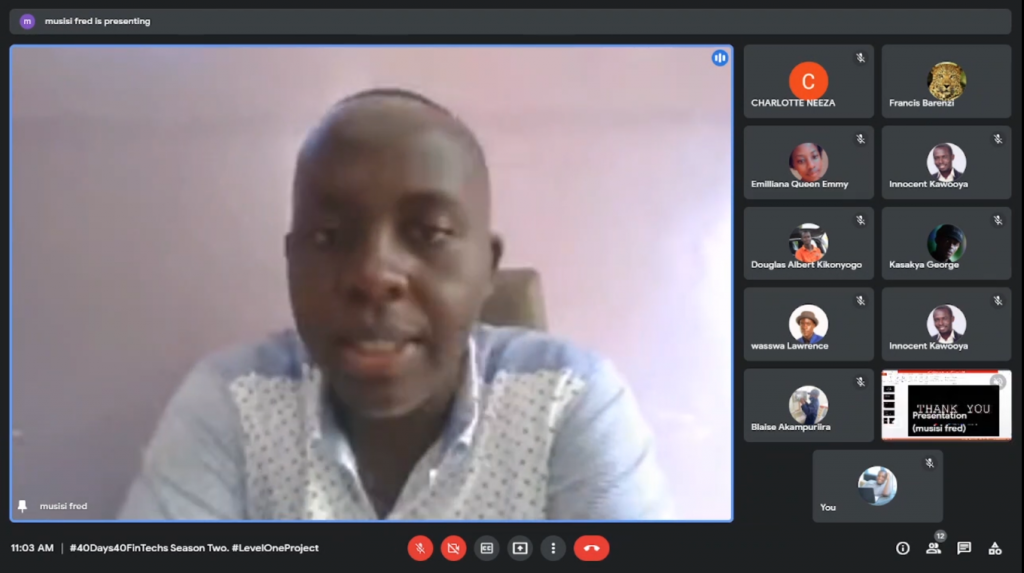
The company’s Chief Executive Officer Fred Musisi says that for any solution to be successful in the African market, it must be customer-centric, putting a customer in mind throughout the solution development process.

“Even before you start developing the solutions, you must have the customer in mind since a number of people do not use high end devices,” he says, adding that this explains why the firm introduced web-based products so as to include as many people as possible. 

He adds: “It is equally important to know the kind of customers you are serving because that is when you will be able to give products that are tailored for their needs.”

Established in 2019, Alpteq offers a range of high quality services in the development, delivery, and maintenance of software in Uganda including POS UG, Ease lend, UG Clinics and School novas.

Under the Ease Lend product, Alpteq has automated a number of women dominated SACCOs, including Self Sustainable Graduate SACCO and Mayenze Traders SACCO, among others.

Following the outbreak of the COVID-19 pandemic that has forced the country into two lockdowns so far, Musisi says that Alpteq was forced to revamp its School Novas solution to include an e-learning option to enable learners continue with their studies from home.

Prior to the pandemic, the School Novas product was strictly a management tool for schools.

“While in 2020 and 2021 operations have been largely affected by the pandemic, this period has given us an opportunity to innovate and find ways of serving the less attended to sectors,” Musisi notes.

To enhance financial inclusion, payment for e-learning is done through mobile money.

Additionally, Musisi says that the growing need for businesses to cut costs so as to survive in this pandemic that contracted business, forced Alpteq to rethink its POS UG solution to enable businesses prioritise expenditure to lower expenses. 

Musisi notes that through automation, businesses have been able to operate more efficiently and effectively.

Alpteq is participating in the ongoing second edition of the 40-Days 40-FinTechs initiative, organized by HiPipo in partnership with Crosslake Technologies, ModusBox and Mojaloop Foundation, and sponsored by the Gates Foundation.

The initiative provides a platform for FinTechs and stakeholders in the digital and financial technology space to exhibit their products and share ideas.

Musisi applauded HiPipo for the initiative, saying it has given them market visibility.

Additionally, he notes that the initiative has exposed FinTechs to a number of helpful technologies such as Mojaloop, which have enabled them improve the kind of products and solutions they bring to market.

The HiPipo Chief Executive Officer Innocent Kawooya says that FinTech is the launchpad on which the promise of full global financial inclusion will be fulfilled.

“The 40-Days 40 FinTechs LevelOneProject shall show we have the innovators to take on the challenges,” he says.

Merchandise Uganda helping local businesses tap into global financial system

By our writer

Merchandise Uganda is not only increasingly connecting more Ugandan businesses to buyers across the world, but is also helping them tap into the global financial system.

Through the platform, many micro and small enterprises in Uganda that lacked online presence, due to among others, absence digital skills, have gained online presence, which has enabled them create visibility for their products.

According to Nurudin Busingye, the Merchandise Uganda General Manager, the platform was established after realizing that over 15 million Ugandan businesses do not have online display of their products.

Busingye says Merchandise Uganda, which is gaining prominence in Uganda, has supported over 200 businesses, which now have online shops and thus have an opportunity to interact with their buyers globally.

Established in March 2019, the platform allows merchants to open mini-showrooms through which they market their products to potential buyers by posting product photos and adverts, reviews, tips and videos.

Busingye says that the platform has also enabled their clients to connect directly with manufacturers in China to supply them goods without them having to travel to China, which has reduced their cost of operations.

“The businesses use our platform to remain connected to their suppliers; even in the lockdown where people were not allowed to move, those who subscribed to Merchandise Uganda remained relevant because their shops were open and used our delivery team to deliver the products to the buyers,” he explains.

It accommodates a number of sectors including agriculture, construction, manufacturing, legal logistics, hotels, education and family, general merchandise and health, among others, where people post their products, depending on the category.

One can subscribe to Merchandise Uganda upon entering their business details and paying Shs 50,000, Shs100,000 or Shs 200,000 depending on the category chosen, then submit quality pictures of the products being marketed.

In a bid to support women, Busingye notes that Merchandise Uganda trained 30 members of the Uganda Women Entrepreneurs Association in digital skills to enable them promote their businesses online.

Additionally, Merchandise Uganda also offers three months of free services to all women enterprises that subscribe to the platform, help them brand their businesses and support them in getting social media accounts to market their businesses.

40-Days 40-FinTechs

Merchandise Uganda is among the companies taking part in the ongoing second edition of the 40-Days 40-FinTechs, organized by HiPipo in partnership with Crosslake Technologies, ModusBox and Mojaloop Foundation, and sponsored by the Gates Foundation.

The initiative seeks to enable FinTechs to innovate solutions that facilitate cross-network financial transactions at minimal risks to enhance access to financial services.

Busingye commends HiPipo for the 40-Days 40-FinTechs initiative, saying that it has created for them visibility, noting that from last year’s edition, they were able to get a partner that linked them to the American Embassy, through which their clients started selling to people in the Diaspora.

To further support the growth of the Uganda’s FinTech industry, Busingye requested the government to put in place enabling policies, especially in relation to access and cost of internet and also offer tax incentives, saying FinTechs are playing a big role in promoting a cashless economy.

The HiPipo Chief Executive Officer Innocent Kawooya says the 40-Days 40-FinTechs initiative seeks to boost the African FinTech ecosystem to enable innovators enjoy sustainable profitability to help them design and deploy affordable and inclusive financial services for the poor.

He adds that FinTech in Africa offers attractive opportunities and that investors are rightfully picking interest in various startups offering a plethora of services, ranging from payments and lending, remittances and cross-border transfers, among others.

Merchandise Uganda can be accessed on www.merchandiseuganda.com

Buladde’s voluntary savings, soft loans helping people improve their land security

Our writer.

Several people across the country have fallen victim to land evictions or have their pieces of land lying idle for lack of funds to develop them.

In a bid to solve this challenge especially in the Buganda region where such cases are rampant, Buladde Financial Services, a Cooperative Society, was started by the Buganda Land Board to help people improve their security of tenure on land.

According to John Mark Ernest Golooba, the Buladde Financial Services Manager, this was done through voluntary savings and access to affordable credit facilities to enable people secure the land and use it to develop themselves.

“If you have land with the right documentation, you can access money from financial institutions. You can also get partners to develop the land,” Golooba says.

The Cooperative is currently serving 3,650 customers in Kampala and Wakiso, with 58% of them being women.

Golooba notes that women are more interested in savings and accessing soft loans, given that most of them are involved in a number of trading activities.

Using savings and soft loans from Buladde, Golooba says that the women have also been able to expand their businesses.

While the Cooperative is able to serve its existing clients immediately, it still takes about a week for new clients as it still has to do manual background checks, which consumes time.

In a bid to serve its clients in a convenient and efficient manner, however, Buladde Financial Services set out to streamline service provision by embarking on a digitisation journey last year.

All client information has since been transferred onto the new system, according to Golooba.

 “All client information is in the system but we are now working on having them transact digitally so that they don’t have to come to office to transact,” Golooba notes.

Buladde Financial Services is among the firms participating in the ongoing second edition of the 40-Days 40-FinTechs initiative, organized by HiPipo in partnership with Crosslake Technologies, ModusBox and Mojaloop Foundation, and sponsored by the Gates Foundation.

Golooba commended the organizers for the initiative, which he says has widened their understanding of the financial services sector in relation to technology.

“It has helped us see why we need to digitize our services because it is for our own good. It will help us improve on efficiency in service provision and effect real-time settlement which can only be done when you are digital,” he notes.

He adds: “You find that we also have a challenge of people who come to borrow from us yet they have multiple loans from other institutions while others present forged documents for security. But I believe when we digitize, and solutions like Mojaloop are adopted to enable us access information in a pool, doing background search will be made easier to curb such issues.”

The HiPipo Chief Executive Officer Innocent Kawooya says the 40-Days 40-FinTechs initiative seeks to boost the African FinTech ecosystem to enable innovators enjoy sustainable profitability to help them design and deploy affordable and inclusive financial services for the poor.

He explains that FinTechs have played a great role in financial inclusion across Africa, as the various products and services innovated by FinTech players are impacting thousands of people at the last mile.

Buladde Financial Services can be accessed on www.buladde.or.ug

Green Shares is driving smallholder farmers’ financial inclusion and unlocking their potential

By Our writer

It is estimated that at least 80 per cent of Ugandan farmers are smallholders. Despite their everyday challenges, they contribute the largest share of agricultural production.

To help them boost production and increase their incomes, Green Shares, a social enterprise that started operations in 2019, is leveraging technology to unlock their potential and have them financially included.

The firm’s director, Annet Nanyanzi, says the company provides a range of services to farmers to help improve production, productivity and incomes.

These range from market linkages, agronomy, saving and access to micro loans through partnerships to helping agro-processers find quality raw materials, among others.

Once the farmer takes their produce to the community agent, it is verified for quality and quantity, logged onto the Green Shares platform and payment is triggered and approved. Payment is then effected in real time using mobile money.

While some farmers don’t have access to phones and mobile money services, Nanyanzi says the platform has a feature that enables them access their money through their next of kin.

Green Shares mainly deals in the maize, soybeans and rice value chains. It currently operates in Luweero, Kiryandongo and Kasese districts.

To date, they have reached 180 farmers, earning Shs 30m, with the volume sourced from farmers estimated at 35 metric tones

Green Shares also provides a platform where investors can inject some money in the company’s Trading Fund for a return.

Apart from paying farmers using its e-platform on mobile money, the company leverages partnerships with micro finance companies in areas where it works to enable them access credit.

In Luwero for instance, it partnered with Micro Credit for Development and Transformation (MCDT) that provides loans mainly to women to enable them buy farm inputs and pay labour costs.

Nanyanzi, however, expresses concern that the small-sized farms that majority of farmers have reduce commercial viability and increase aggregation costs.

However, she notes that Green Shares is working on an intervention that will see it leverage farm leasing solutions for farmers.

“A number of landowners are in urban areas with chunks of land in the villages not being utilized. They can lease their land to the farmers through Green Shares for a return,” she says.

Digital farms

Nanyanzi says the company plans to leverage technology to launch digital farms, starting with Nwoya and Luweero districts, to enable people without land or time to invest in agriculture to own digital farms managed by Green Shares, to increase production and incomes.

“We believe everyone can participate in farming. There are people without time or land to farm but we believe this can be an investment vehicle for even those without farms to own digital farms and earn a return,” she says.

The investor will be able to choose a value chain of preference to invest in and a location with the GPS coordinates and timely updates on how the farm is performing.

The farms will also have crop insurance to de-risk losses that agriculture faces.

The company also plans to promote an integrated farming model, which enables farmers earn income all-year-round.

The farmers’ platform under development will enable them profile farmers, track their yield, income and costs of production to enable them devise appropriate interventions for higher production and incomes.

40-Days 40 FinTechs

Green Shares is among the firms participating in the ongoing 40-Days 40-FinTechs initiative, organized by HiPipo in partnership with Crosslake Technologies, ModusBox and Mojaloop Foundation, and sponsored by the Gates Foundation.

Nanyanzi applauded HiPipo for the initiative, saying that it has provided a platform that enables the wider community to know more about innovations Ugandan entrepreneurs are engaged in.  She adds that it also provides a platform for FinTechs like Green Shares to sketch for potential partnerships, synergies with other FinTechs and funding opportunities.

The HiPipo Chief Executive Officer Innocent Kawooya says that FinTech is the launch pad on which the promise of full global financial inclusion will be fulfilled.

He adds that FinTech in Africa offers attractive opportunities and investors are rightfully picking interest in the various startups that are offering a plethora of services.

Green Shares can be accessed on www.egreenshares.com